A Brand That Defined Generations in China
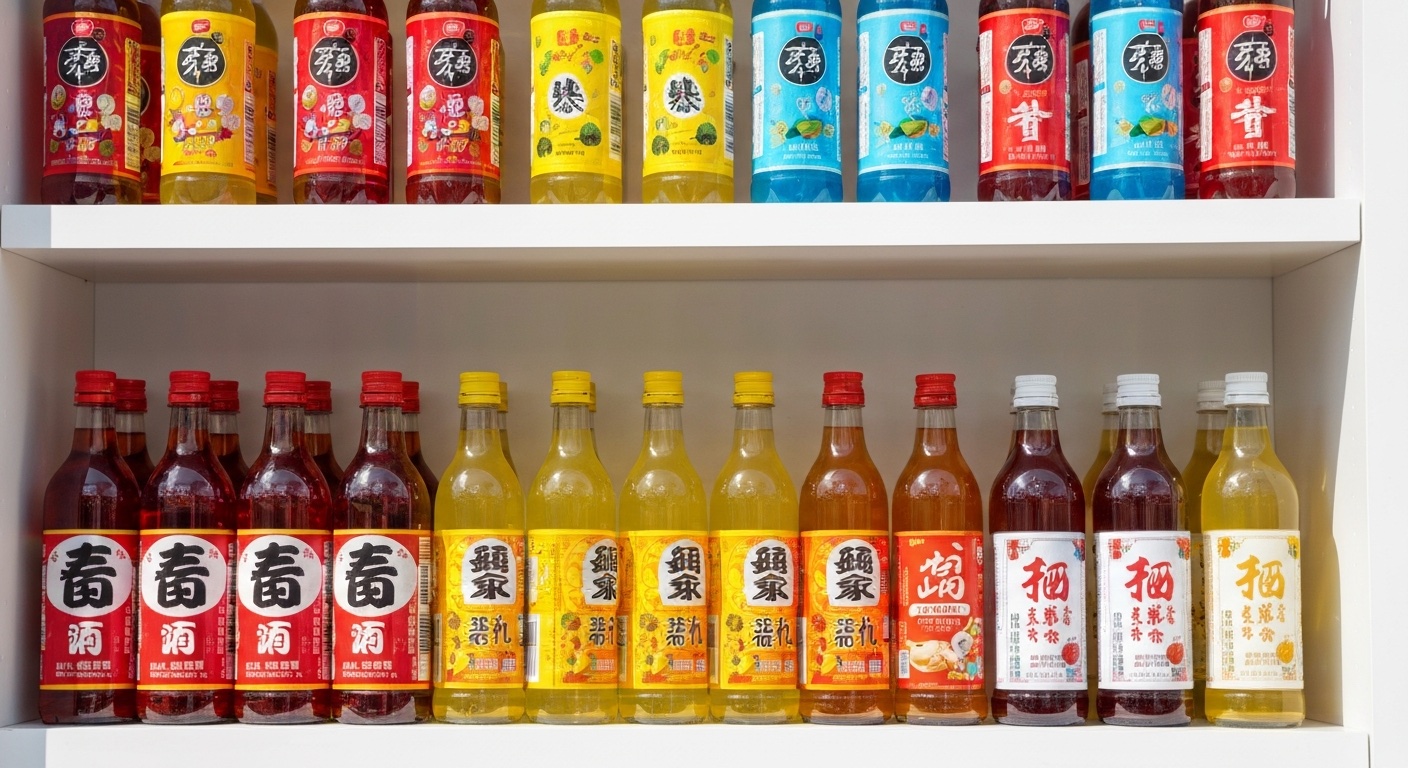
Anyone who has been to any convenience store, corner grocery store, or supermarket in mainland China has certainly seen Wahaha bottles. Mineral water, flavored milk, juices, iced teas — the Wahaha Group has dominated the Chinese beverage market for over three decades. In the 2000s, it was almost impossible to find a Chinese city, no matter how small, without a Wahaha product on the shelf.
Now, this iconic brand is undergoing a transformation that few imagined: the company is changing its name. Hangzhou Wahaha Group begins to operate under the name Hongsheng (宏胜), signaling the end of a cycle and the beginning of a new phase under the leadership of Zong Fuli, daughter of the legendary founder Zong Qinghou.
For those who follow business in China, this change goes far beyond branding. It reveals tensions between tradition and renewal, between the personalized management model that built modern China and the professionalism demanded by the 21st-century economy.
The Story of Wahaha: From a School Kiosk to a National Giant
Wahaha was not born in a shiny office in Shanghai or Beijing. It started in 1987, in a sales department of a school in the Shangcheng district of Hangzhou, the capital of Zhejiang province. Zong Qinghou, who was 42 years old at the time and had never attended university, sold milk, soft drinks, snacks, and school supplies at a school entrance.
In 1989, Zong identified a gap in the market: there were 38 manufacturers of liquid nutritional supplements in China, but none specifically aimed at children. He created the "Hangzhou Wahaha Nutritional Foods Factory" and launched a liquid children's nutritional supplement. The move was spot-on. Chinese parents — most with only one child due to the one-child policy — were willing to spend on children's health. The product was a resounding success.
In 1991, Wahaha's factory merged with the bankrupt "Hangzhou Canned Food Factory" in a social restructuring promoted by the local government. The merger brought higher operational costs, but also scale. Zong tried to go public in 1992, but the Chinese stock market was still in its infancy and the attempt failed.
In the following years, Wahaha tried various paths — plum drinks, distilled spirits, pseudo-medical potions — and all failed. But in 1994, with the acquisition of three insolvent companies in Sichuan and the opening of its first factory in Chongqing, the group began to gain national reach. Distribution costs to western China dropped dramatically.
The big leap came with Wahaha Pure Water, purified water that became a sales phenomenon. In the following three years, the group acquired more than 40 companies in 22 provincial cities, consolidating itself as one of the country's largest beverage companies.
The Partnership with Danone
In 1995, investment bank Peregrine Investments introduced Zong Qinghou to the French company Danone. The negotiations resulted in a joint venture signed in March 1996. The foreign partners took 51% of the business — Danone and Peregrine invested US$ 70 million in return for participation in five Wahaha companies, with exclusive rights to production, distribution, and sales under the brand.
When Peregrine collapsed during the 1998 Asian financial crisis, Danone bought its stake and became the majority partner. The business grew to 39 joint venture entities by 2007, with a total capital injection of US$ 131 million.
But the relationship ran into problems. In April 2007, Danone entered into a dispute with Zong over parallel operations. The dispute dragged on for two years. The case was closed in September 2009, with Danone selling its stake and exiting the business.
Wahaha launched products under alternative brands — such as "Qili" — and created parallel distribution networks. The company proved that it could operate independently.
The Distribution Network No One Could Copy
One of the secrets of Wahaha's dominance was its distribution network. With 35 regional sales offices, more than 2,500 commercial employees, and more than 2 million sales points across the country, Wahaha was one of only three brands in China with no distribution gaps in rural areas.
The model was ingenious: more than 1,500 first-level distributors met distribution targets and managed large capital networks. Below them, 12,000 second-level distributors operated on a smaller scale. Areas of operation were strictly delineated. Security deposits held with Wahaha ensured compliance with the rules.
It was this wide reach that allowed Wahaha's "Future Cola" to capture the third place in national market share, dominating rural China and second and third-tier cities — precisely the markets that Coca-Cola and Pepsi had difficulty reaching.
The Death of Zong Qinghou and the Leadership Vacuum
Zong Qinghou died on February 25, 2024, at the age of 78. His death marked the end of the journey of one of the most emblematic entrepreneurs of post-Mao China — a man who left school early, worked on a salt farm in Zhoushan during the rural youth movement, and read the works of Mao Zedong in his spare time.
Zong was famous for living on less than $6,000 a year, attributing his frugality to principles of hard work. He controlled every detail of the business with an autocratic style and a workaholic routine. Under his management, Wahaha reached 67.8 billion yuan in revenue in 2011 and employed about 60,000 people across 150 subsidiaries and 60 manufacturing bases throughout China.
With the death of the patriarch, the question everyone was asking was inevitable: who takes over?
Zong Fuli: The Heir
Zong Fuli (宗馥莉), also known as Kelly Zong, is the only daughter of Zong Qinghou. She studied at Pepperdine University, in Southern California.
Within Wahaha's corporate structure, Fuli already held strategic positions before her father's death. She was the legal representative of Ever Maple Trading Ltd., a company that controlled part of Zong Qinghou's shares in the group through Hangzhou Hongsheng Beverage Co Ltd (杭州娃哈哈广盛投资公司).
The name Hongsheng is not new in the Wahaha ecosystem. The Hongsheng company already functioned as an investment vehicle and holding company for various subsidiaries. In practice, it was the other arm of the group — the arm that Zong Qinghou personally controlled.
The leadership transition was not simple. Zong Fuli inherited a group with a complex ownership structure: 29.4% of the shares belonged to the founder, 24.6% to employees and managers through the Zhejiang Wahaha Industries Joint-stock Co., and 46% to the Shangcheng district government. The corporate reorganization requires negotiation with multiple stakeholders, including the local government.
The Name Change: From Wahaha to Hongsheng
The decision to operate under the Hongsheng name represents more than a cosmetic rebranding. It is a reorganization of the group that separates Wahaha's historical legacy from a leaner corporate structure under the direct control of the Zong family.
Hangzhou Hongsheng Beverage already existed as an investment subsidiary. By elevating it to the main entity, Zong Fuli signals her intention to consolidate family control over the beverage empire, possibly simplifying the web of more than 150 subsidiaries, joint ventures, and offshore companies that characterized the group during her father's era.
For the Chinese market, the change raises practical questions. The Wahaha brand has massive recognition — it's present in Chinatowns around the world. Abandoning that name is a high-stakes bet. But it may also be a necessity: the name Wahaha carries the weight of legal disputes and opaque corporate structures that could bog down the company in an era when the Chinese government demands corporate transparency.
What This Says About China Today
The transition from Wahaha to Hongsheng is a microcosm of something larger happening in the Chinese economy. The first generation of private entrepreneurs from the Reform and Opening era is aging and dying. Zong Qinghou belonged to a cohort of founders who built empires with personal charisma, political connections, and market instinct — often without formal governance structures.
The second generation faces a different landscape. The Xi Jinping administration demands political alignment and transparency. Chinese consumers are more sophisticated. Competition with international brands and new food technology companies is fierce. The old formula of wide distribution and low prices is no longer enough.
Zong Fuli needs to modernize management without alienating the group's 60,000 employees, maintain the relationship with the Hangzhou government (which holds nearly half the shares), and decide what to do with dozens of subsidiaries operating in diverse sectors.
Companies like Wahaha/Hongsheng are a barometer of China's ability to make generational transitions in the private sector without crisis. If Zong Fuli succeeds, she will be a model. If not, it will be another chapter in the long history of business empires that do not survive their founder.
Why This Matters for Those Watching China
The story of Wahaha is a lesson in how business works in China: the symbiotic relationship between private enterprise and local government, tensions with foreign capital, the importance of distribution in a continental country, and the fragility of empires built around a single individual.
For investors, analysts, and anyone interested in understanding contemporary China's economy, following the Wahaha-Hongsheng transition is essential. It is a story that combines family succession, corporate restructuring, industrial policy, and the future of mass consumption in China.
At chinato.watch, we closely follow these transformations — the changes that shape the world's second-largest economy and that rarely make the news with the depth they deserve. If you want to understand China beyond the headlines, follow our analyses.