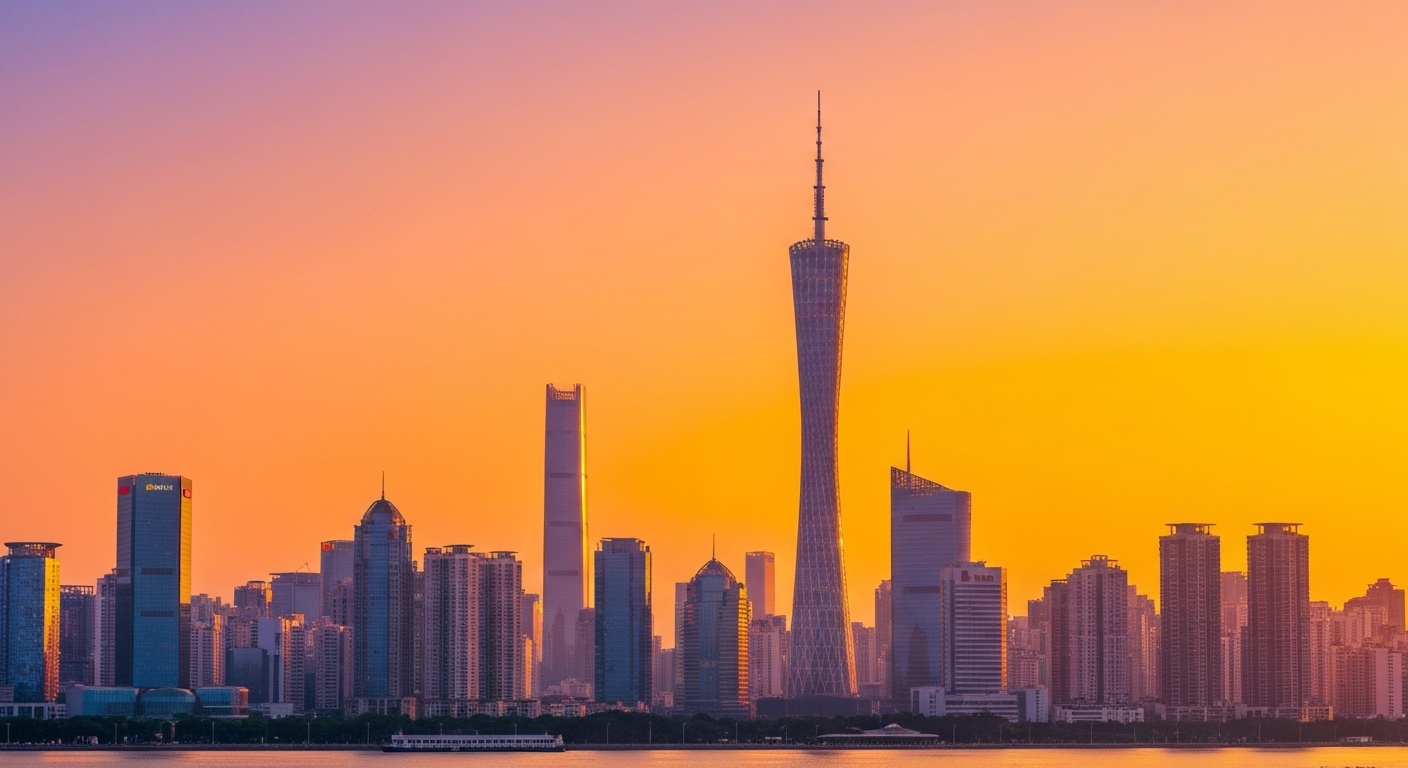
From Fishing Village to Global Metropolis in 45 Years
In 1979, Shenzhen was an agricultural and fishing county called Bao'an, with about 30,000 inhabitants in its urban area and an economy based on rice and fishing. Today, the city has 17.56 million inhabitants (2020 census) and a nominal GDP of US$557 billion (2025) — greater than that of entire countries like Argentina or Norway. For perspective: São Paulo, the largest city in Latin America, has a metropolitan GDP estimated at US$370 billion. Shenzhen alone surpasses that figure by more than 50%.
This transformation was no accident. It was the direct result of a bold political bet, executed with industrial discipline and a generous dose of Chinese pragmatism.
1980: Deng Xiaoping's Experiment
On May 1, 1980, Deng Xiaoping designated Shenzhen as China's first Special Economic Zone (SEZ). The choice was strategic: the city bordered Hong Kong to the south, which facilitated the influx of foreign capital, technology, and managerial know-how. Companies from Hong Kong, Taiwan, and the West could operate there with tax incentives, flexible labor rules, and reduced bureaucracy.
The concept was both simple and radical: to create a bubble of controlled capitalism within a socialist country. If it worked, the model would be replicated. It worked.
In the first ten years, Shenzhen grew at double-digit rates annually. Factories for electronics, textiles, and toys sprouted in warehouses that replaced the rice paddies. Migrant workers from all provinces of China poured into the city, attracted by wages that, while low by Western standards, were higher than what they could earn in the rural countryside.
The Demographic Explosion No Urban Planner Predicted
Shenzhen's population figures tell a story no other modern city can replicate:
- 1980: ~30,000 inhabitants in the urban area
- 1990: ~875,000
- 2000: ~7 million
- 2010: ~10.3 million
- 2020: 17.56 million (official census)
- Metropolitan area: 23.3 million (OECD estimate, 2010)
A multiplication of nearly 600 times in four decades. The vast majority of these residents are internal migrants — from Hunan, Sichuan, Guangxi, and other provinces. This makes Shenzhen one of China's youngest and most diverse cities, with a lower average age than Beijing or Shanghai.
For comparison, São Paulo took more than 100 years (from 1880 to 2000) to grow from a coffee trading town to its 10 million inhabitants. Shenzhen did something equivalent in a quarter of that time.
The GDP That Surpassed Hong Kong and Guangzhou
Shenzhen's nominal GDP in 2025 reached 3.873 trillion yuan (US$557 billion), according to official municipal government data. This value surpasses both Hong Kong and Guangzhou, its provincial neighbor. In per capita terms, Shenzhen stands at US$30,979 — a developed-country level.
The city is the third-largest urban economy in China, behind only Shanghai and Beijing, and ranks among the ten largest urban economies on the planet. It is home to the Shenzhen Stock Exchange, one of the world's largest by market capitalization, and is classified as an Alpha- city by the GaWC Global Cities Ranking.
Other impressive figures: Shenzhen has the second-highest number of skyscrapers in the world, the fifth-largest concentration of billionaires, and is the seventh-largest hub for Fortune Global 500 company headquarters.
The Giants That Were Born in Shenzhen
When people call Shenzhen "China's Silicon Valley," it is no marketing exaggeration. The city is home to some of the largest technology companies on the planet:
Huawei
Founded in 1987 by Ren Zhengfei with an initial capital of 21,000 yuan (about US$5,600 at the time), Huawei started as a reseller of telecommunications equipment imported from Hong Kong. Today it is the world's largest manufacturer of telecom equipment, with annual revenue exceeding US$100 billion and more than 200,000 employees. Its main campus in Shenzhen (Bantian) and the research complex in Dongguan are global references in R&D.
Tencent
Ma Huateng founded Tencent in Shenzhen in 1998, in the Nanshan district. It started with the QQ messenger and today controls WeChat (1.3 billion users), owns Riot Games (League of Legends), has stakes in Epic Games and Spotify, and has a market capitalization that frequently exceeds US$400 billion. Tencent's headquarters in Binhai is one of the city's most iconic buildings.
BYD
Wang Chuanfu founded BYD in Shenzhen in 1995, initially producing rechargeable batteries. Today the company is the world's largest manufacturer of electric vehicles, having surpassed Tesla in sales volume of new energy vehicles. Shenzhen has become the largest automotive production city in China, largely thanks to BYD. The city's fleet of 100% electric buses — more than 16,000 vehicles — is almost entirely manufactured by BYD.
DJI
Frank Wang founded DJI in 2006, initially in an apartment in the Nanshan district. The company dominates more than 70% of the global civilian and commercial drone market. Its products are used by Hollywood filmmakers, farmers in Brazil's Mato Grosso, and rescue teams worldwide. DJI's global headquarters, Sky City, is one of Shenzhen's most futuristic buildings.
Others
The list doesn't stop there. OnePlus (premium smartphones), Oppo and Vivo (which together control massive shares of the global mobile phone market), ZTE (telecommunications), Mindray (medical equipment), and China Merchants Bank — all have their headquarters or central operations in Shenzhen.
Huaqiangbei: The Electronics Market That Supplies the Planet
If Shenzhen is China's hardware Silicon Valley, Huaqiangbei is its pulsating heart. Located in the Futian district, this neighborhood of just 2.9 km² concentrated, in 2020, more than 38,000 companies and shops. It is the world's largest electronics market.
Walking through the corridors of Huaqiangbei's malls — such as SEG Plaza, Huaqiang Electronics World, and Mingtong Digital City — is a surreal experience. On a single floor, you can find components to build anything: from a customized smartphone to a drone, from printed circuit boards to industrial LEDs. If an electronic component exists, Huaqiangbei has it — probably in ten variations and three price ranges.
For hardware entrepreneurs, Huaqiangbei is the difference between a prototype that takes six months and one that takes six days. This has attracted an international community of makers, startups, and freelance engineers who set up in Shenzhen precisely to be close to this supply chain.
The Startup and Innovation Ecosystem
Shenzhen doesn't just live off its giants. The city has built a multi-layered innovation ecosystem:
- Incubators and accelerators: HAX (the world's largest hardware accelerator, based in Shenzhen), Trouble Maker, Shenzhen Open Innovation Lab (SZOIL)
- Universities: Shenzhen University, SUSTech (Southern University of Science and Technology), and campuses of Tsinghua and Peking University
- Patents: Shenzhen registers more invention patents than many entire countries. The city is a world reference in intellectual property in telecommunications and electronics
- R&D investment: expenditure on research and development as a percentage of GDP is one of the highest in China, exceeding 5%
The municipal government maintains aggressive talent attraction policies: housing subsidies, facilitated visas for qualified foreigners, and tax incentives for technology companies. The result is a virtuous cycle: talent attracts capital, capital generates companies, companies create jobs, and jobs attract more talent.
World-Class Infrastructure
Shenzhen has invested heavily in urban infrastructure. The city's metro, inaugurated in 2004, already has more than 16 lines and hundreds of stations — a network built in record time compared to the decades it takes Western cities to expand their systems.
The Port of Shenzhen is the fourth-busiest in the world by container volume. Bao'an International Airport connects the city to hundreds of international destinations. And the link with Hong Kong, via high-speed rail and bridges, integrates Shenzhen into the Greater Bay Area — a planned megalopolis that includes Hong Kong, Macau, Guangzhou, and other cities, with a combined GDP larger than Australia's.
The bus and taxi fleet is 100% electric — the first major city in the world to reach this milestone. Shenzhen was also a pioneer in the mass use of autonomous vehicles for last-mile deliveries.
Shenzhen vs. São Paulo: What the Comparison Reveals
Comparing Shenzhen with São Paulo is no arbitrary exercise — both cities serve as economic engines for their respective countries. But the contrasts are revealing:
| Indicator | Shenzhen | São Paulo (municipality) |
|---|---|---|
| Population | 17.56 million | ~12.3 million |
| GDP (nominal, US$) | ~557 billion | ~260 billion |
| GDP per capita (US$) | ~30,979 | ~21,000 |
| Global tech companies headquartered | Huawei, Tencent, BYD, DJI | — |
| Metro (lines) | 16+ | 6 |
| Electric buses | 100% of fleet | Target of 2038 |
| City age | ~45 years (as metropolis) | ~470 years |
This is not about saying one city is "better" than the other — they operate in completely different political, historical, and cultural contexts. But the comparison shows what is possible when a government decides to make a region a strategic priority and executes the plan with consistency over decades.
The Challenges Nobody Hides
Shenzhen is not a utopia. The cost of living has surged: real estate in districts like Nanshan and Futian competes with Hong Kong and Tokyo. Pressure on migrant workers remains high, with long hours and conditions that, in many smaller factories, fall far from ideal.
The dependence on exports makes the city vulnerable to trade wars — US tariffs on Chinese products hit Shenzhen-based companies hard. And competition with other Chinese cities (Hangzhou, Chengdu, Wuhan) for talent is becoming increasingly fierce.
But these are the problems of a city at the top — and knowing this already says a great deal about how far Shenzhen has come.
What Shenzhen Means for Those Observing China
Understanding Shenzhen is understanding the Chinese development model. The city is the most spectacular proof of concept of what China calls "socialism with Chinese characteristics": central planning defining the direction, the market executing, and pragmatism replacing ideology when necessary.
For those following business, technology, or geopolitics, ignoring Shenzhen is ignoring one of the most relevant economic forces of the 21st century. The city that was a fishing village 45 years ago today houses the headquarters of companies defining the future of electric mobility, 5G telecommunications, artificial intelligence, and drones.
If you want to understand the China that really matters — not the postcard China, but the China that builds, manufactures, and exports — Shenzhen is where the story is happening.
Follow more analyses on the Chinese economy
At China to Watch, we translate the complexity of China for those who want to understand without ideological filters. If this article was useful, explore our other content on the Chinese economy, technology, and geopolitics. Subscribe to our newsletter and receive analyses directly in your inbox — no spam, no filler.