Huawei without Google, without American chips: how the company earns $121 billion
How Huawei lost Google, ARM, and TSMC, created its own system and chip, and achieved a record revenue of $121 billion even under American sanctions.
Phelipe Xavier
Creator of China to Watch · lives in China · February 26, 2026 · 11 min read
The Day Huawei Lost Everything — and Decided Not to Die
On May 15, 2019, the US Department of Commerce added Huawei Technologies to the Entity List, the most severe list of trade restrictions by the American government. In practice, any American company that wanted to sell technology to Huawei would need a special license — which would rarely be granted. From one day to the next, the world's second-largest smartphone manufacturer lost access to Google Mobile Services, the Android system with Google apps, chips manufactured by TSMC, and the processor architecture of ARM Holdings.
The official reason from the US was national security. Huawei would be, according to Washington, a risk due to its alleged ties with the Chinese government and the People's Liberation Army. The company has always denied the accusations. But the geopolitical motivation was evident: Huawei led the global race for 5G, with technology cheaper and, in many aspects, more advanced than that of American and European rivals. Preventing Huawei's advance was preventing the advance of China's digital infrastructure in the world.
What happened next is one of the most extraordinary cases of corporate resilience in the last decade. In 2024, Huawei reported an estimated revenue of 880 billion yuan — approximately US$121 billion —, a historical record that surpasses even the numbers before the sanctions. The company not only survived: it grew.
The Timeline of the Siege: how the sanctions piled up
To understand the magnitude of the problem, it is necessary to follow the sequence of blows that Huawei received between 2019 and 2020.
In May 2019, the inclusion in the Entity List cut off access to the Google ecosystem. Huawei smartphones stopped coming with Gmail, YouTube, Google Maps, and the Play Store. For consumers outside of China, where these services are essential, this was a death sentence for business. Huawei's global market share in smartphones plummeted from 18% to less than 4% in two years.
In May 2020, the blow deepened. The US expanded restrictions to prohibit any chip foundry that used American-made equipment from manufacturing semiconductors for Huawei. This directly hit TSMC in Taiwan, which produced the Kirin chips of subsidiary HiSilicon. TSMC cut off supply in September 2020. Without top chips, Huawei could not produce competitive smartphones.
ARM Holdings, the British company whose architectures are the basis for almost all mobile processors on the planet, also suspended licensing for Huawei. Suppliers of chip design software (EDA), such as Cadence and Synopsys, followed the same path. Huawei was left without the dominant operating system, without the chip manufacturer, without the processor architecture, and without the tools to design new chips.
In theory, it was the end.
The Plan B that already existed: HarmonyOS was not born out of despair
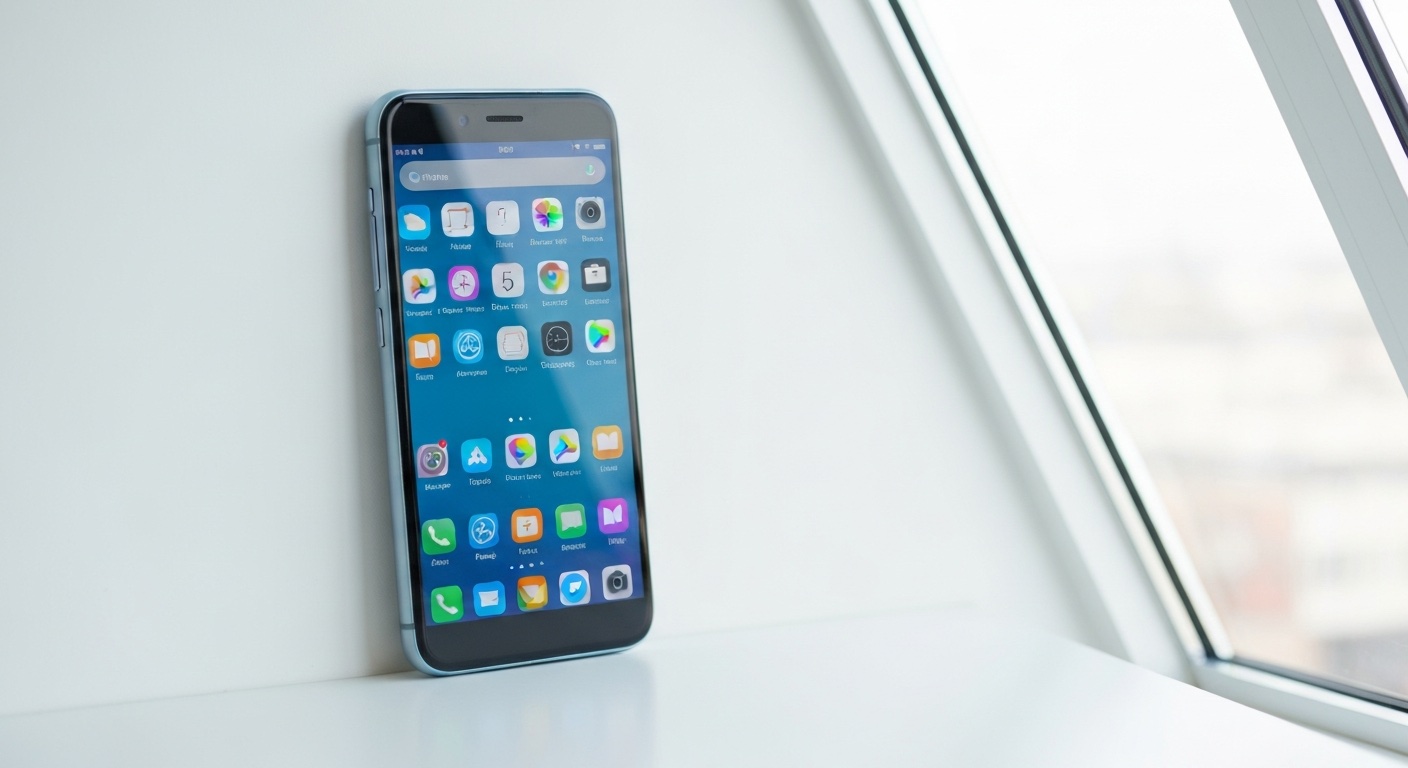
The most visible response from Huawei to the sanctions was HarmonyOS, its own operating system officially launched in August 2019, just three months after being included in the Entity List. But calling HarmonyOS a reaction to sanctions would be imprecise. Development began in 2012, seven years before the ban.
Ren Zhengfei, the founder of Huawei, is a former military engineer who has always operated with a contingency mindset. Within the company, there was the concept of 备胎计划 bèitāi jìhuà, the spare tire plan — technologies developed internally in case external suppliers were cut off. HarmonyOS was one of those spare tires.
The first versions of HarmonyOS ran on a modified base of the Android Open Source Project (AOSP), which generated criticism that it would just be Android in disguise. But Huawei heavily invested in the transition. In 2024, it launched HarmonyOS NEXT, a version that completely eliminated the Linux kernel and compatibility with Android apps. The system runs on the HongMeng Kernel, a proprietary microkernel developed from scratch.
The numbers are impressive. By the end of 2024, HarmonyOS had exceeded 1 billion devices activated globally, including smartphones, tablets, smartwatches, smart TVs, automotive systems, and IoT devices. In China, the system surpassed iOS in market share, becoming the country's second mobile operating system, just behind Android.
The app ecosystem grew rapidly. More than 15,000 native apps were developed for HarmonyOS NEXT, including versions of major Chinese platforms such as WeChat, Alipay, Douyin (Chinese TikTok), Meituan, and Xiaohongshu. For the Chinese market, where Google has never operated, the absence of American services is irrelevant. The issue has always been international — and on this front, Huawei strategically retreated, prioritizing the domestic market.
Kirin 9000S: the chip that should not exist
If HarmonyOS was the software response, the Kirin 9000S was the hardware response — and the most surprising.
In August 2023, Huawei launched the Mate 60 Pro without any prior announcement. Analysts disassembled the device and discovered something that the market considered impossible: a Kirin 9000S chip manufactured in a 7-nanometer process by SMIC (Semiconductor Manufacturing International Corporation), China's largest foundry.
SMIC, also under American sanctions, should not have the ability to produce 7nm chips. Equipment for extreme ultraviolet lithography (EUV) from the Dutch ASML, necessary for processes below 7nm, is prohibited from being exported to China. SMIC managed using deep ultraviolet lithography (DUV), an older technique, with multiple exposures — a slower, more expensive, and lower yield process, but functional.
The Kirin 9000S does not compete in raw performance with the latest chips from Qualcomm or Apple, manufactured in 3nm by TSMC. But it is good enough. The Mate 60 Pro supports 5G (a capability that Huawei had lost in previous models), runs complex applications, and has sold millions of units in China. The launch coincided, symbolically, with the visit of US Commerce Secretary Gina Raimondo to Beijing.
In 2024, Huawei advanced to the Kirin 9010, and there are reports of the development of the Kirin 9020 in even more refined processes. The message was clear: sanctions delayed, but did not stop the development of Chinese semiconductors.
Record revenue: where does the US$121 billion come from
Huawei is not just a cell phone company. In fact, smartphones represent only a slice of revenue. The company's structure is divided into three major pillars — and understanding this explains how it resisted.
The first pillar is the telecommunications infrastructure division, which includes equipment for 4G, 5G networks, and solutions for operators. Huawei continues to be the world's largest supplier of telecommunications equipment, with a market share of over 30%, ahead of Ericsson and Nokia. Although it has been banned from 5G networks in countries such as the US, Australia, the UK, and parts of Europe, the company maintains massive contracts in Asia, Africa, the Middle East, and Latin America. This division alone generates tens of billions in annual revenue.
The second pillar is the enterprise solutions division, including cloud computing (Huawei Cloud), artificial intelligence, data centers, and smart city solutions. Huawei Cloud has grown aggressively in the Chinese and emerging markets, competing with Alibaba Cloud and Tencent Cloud. The company also develops Ascend series AI chips, which compete with NVIDIA's GPUs — another category under American restrictions.
The third pillar is the consumer and automotive division. In addition to smartphones and tablets, Huawei has partnered with Chinese car manufacturers to provide intelligent steering systems, digital cockpits, and electric vehicle platforms. The partnership with Seres (formerly SF Motors) produced the AITO brand, whose electric SUVs sell tens of thousands of units per month in China. Huawei does not manufacture cars, but provides their digital brain — a business model that resembles that of Qualcomm in the mobile sector.
The combination of these three pillars explains the record revenue. While smartphones suffered internationally, telecommunications infrastructure maintained the base, cloud and AI grew, and the automotive sector added a new source of revenue that did not exist before the sanctions.
5G: the technology the US tried to contain and could not
The central point of the dispute has always been 5G. In 2019, Huawei held more essential 5G patents than any other company in the world — about 20% of the global total, according to IPlytics data. Banning Huawei from Western 5G did not eliminate this technological advantage.
In China, Huawei provided most of the 5G infrastructure for the three national operators: China Mobile, China Telecom, and China Unicom. The country has built more than 3.5 million 5G base stations, representing more than 60% of all 5G base stations on the planet. Huawei was the main beneficiary of this massive rollout.
In markets where it was not banned, Huawei continues to supply 5G equipment at competitive prices. In many African, Southeast Asian, and Latin American countries, there is no alternative to Huawei at an affordable cost. Ericsson and Nokia are more expensive and, in some cases, less integrated.
The result is paradoxical: American sanctions have strengthened Huawei's position as a Chinese national champion, accelerated the development of domestic technology, and did not prevent the company from leading globally in 5G infrastructure.
What Brazilian companies can learn from Huawei
The story of Huawei is not just about Sino-American geopolitics. It is a case study on technological dependency and supply chains — issues that should concern any Brazilian company.
Brazil is almost entirely dependent on foreign technology for semiconductors, operating systems, cloud services, and telecommunications infrastructure. There is no national Plan B for any of these categories. If tomorrow access to American cloud services were restricted, or if chips became unavailable due to geopolitical issues, the Brazilian digital economy would come to a halt.
The lesson from Huawei is not that every company needs to create its own operating system. It is that continuous investment in internal technological capacity, even when it seems redundant, is strategic insurance. Huawei spent more than US$23 billion on research and development in 2023 — about 23% of total revenue. This level of investment in R&D is rare even among American companies.
For Brazilian companies that operate with China or depend on Asian supply chains, the message is double: first, diversifying suppliers is essential, not optional. Second, China is developing complete alternatives to the American technological ecosystem — from chips to operating systems, from cloud to AI — and these alternatives will become increasingly relevant commercially.
The price of survival: what Huawei lost
It is important not to romanticize the narrative. Huawei paid a high price for the sanctions. The company lost its position as the world's largest smartphone manufacturer to Samsung and Apple. Its Honor brand was sold in 2020 to a consortium of Chinese companies, precisely so that the brand could operate without the restrictions of the Entity List. The company's CFO, Meng Wanzhou, daughter of the founder, was detained in Canada for almost three years in the extradition process.
The European smartphone market, which was the largest outside of China, virtually disappeared. The consumer division shrank dramatically between 2020 and 2022 before recovering with the return of Kirin chips. The cost of producing domestic chips, with lower yield and older technology, is significantly higher than buying from TSMC.
Huawei survived not because the sanctions failed, but because the company had scale, capital, an immense domestic market, and an organizational culture obsessed with self-sufficiency. Few companies in the world would have the resources to absorb blows of this magnitude and still invest tens of billions in R&D.
After 880 billion yuan: what comes next
The 880 billion yuan revenue in 2024 places Huawei at a level comparable to giants like Samsung Electronics. But the challenges continue. The US continues to expand restrictions, including limitations on the export of AI chips and semiconductor design tools. The technological gap in chip manufacturing processes — TSMC already operates at 2nm while SMIC struggles to stabilize 7nm — is real and significant.
Huawei's bet for the next decade is on three fronts: consolidate HarmonyOS as a complete ecosystem beyond China, expand the automotive division with more partnerships, and position Huawei Cloud and Ascend chips as a viable alternative to American AI solutions.
Founder Ren Zhengfei, at 80 years old, built a company that earns more than US$100 billion without access to American technology. Whatever your opinion about Huawei, China, or sanctions, the operational fact is undeniable: the company turned the biggest crisis in its history into fuel for reconstruction.
This topic was featured in China to Watch, where we closely follow the technological, economic, and geopolitical movements that connect China to the rest of the world — including Brazil. If you want to understand the China that really matters for your business and the future, follow our weekly analyses.
We store your visit source locally. Data leaves only if you subscribe to the newsletter. Accepting enables anonymous metrics with no external tracking.
 Phelipe Xavier
Creator of China to Watch · lives in China · February 26, 2026 · 11 min read
Phelipe Xavier
Creator of China to Watch · lives in China · February 26, 2026 · 11 min read