The world's largest jewelry store has a US$5,200 problem
Gold hit US$5,204 per troy ounce in February 2026 (Yahoo Finance). For Chow Tai Fook — the world's largest jewelry network, with more than 7,000 stores spread across China, Hong Kong, Macau, and nine other countries — this means one thing: passing the cost on to the consumer. And the pass-on is not small. We are talking about increases of the order of 33% in the prices of gold pieces over the last few months, following the metal's surge from around US$3,900 in the third quarter of 2025 to the current levels.
To understand the size of the impact, it is necessary to understand the size of Chow Tai Fook. And to understand Chow Tai Fook, it is necessary to understand what gold means to the Chinese — something that goes far beyond investment or ostentation.
Chow Tai Fook: 97 years selling gold in China
The story begins in 1929, in Guangzhou, when Chow Chi-yuen opened a small jewelry store. The chosen name — 周大福, Zhōu Dà Fú — literally means "Zhou, great fortune" (Wikipedia/Chow Tai Fook). It was a promise and a premonition. In the following years, the store moved to Macau and then to Hong Kong, fleeing the instability of war and revolution.
The one who turned the jewelry store into an empire was Cheng Yu-tung, the son-in-law of the founder, who took command in 1956. Under his leadership, Chow Tai Fook diversified into a conglomerate with arms in real estate, hospitality, energy, telecommunications, and casinos. New World Development, one of its subsidiaries, has been listed on the Hong Kong Stock Exchange since 1972. The jewelry division was separately listed in 2011, under the code SEHK: 1929 — in homage to the year of foundation.
Today, the group is controlled by the Cheng family, with Henry Cheng at the helm. The jewelry network operates more than 7,000 points of sale, most of them on the Chinese mainland. To put it into perspective: Tiffany & Co., acquired by LVMH in 2021 for US$15.8 billion, operates about 300 stores worldwide. Cartier has just over 250. Chow Tai Fook has more stores than the ten largest Western jewelry stores combined.
The company has become the world's largest jewelry store in revenue, ahead of Signet Jewelers (owner of Kay Jewelers and Zales in the USA) and Chinese competitors such as Chow Sang Sang and Luk Fook. Its business model fundamentally depends on one thing: gold. Not diamonds, not precious stones — 24-karat pure gold, the standard preferred by Chinese consumers.
Why gold is so valuable to the Chinese
In Western culture, gold jewelry is accessories. In China, gold is a parallel financial system, a protection amulet, and a social contract — all at the same time.
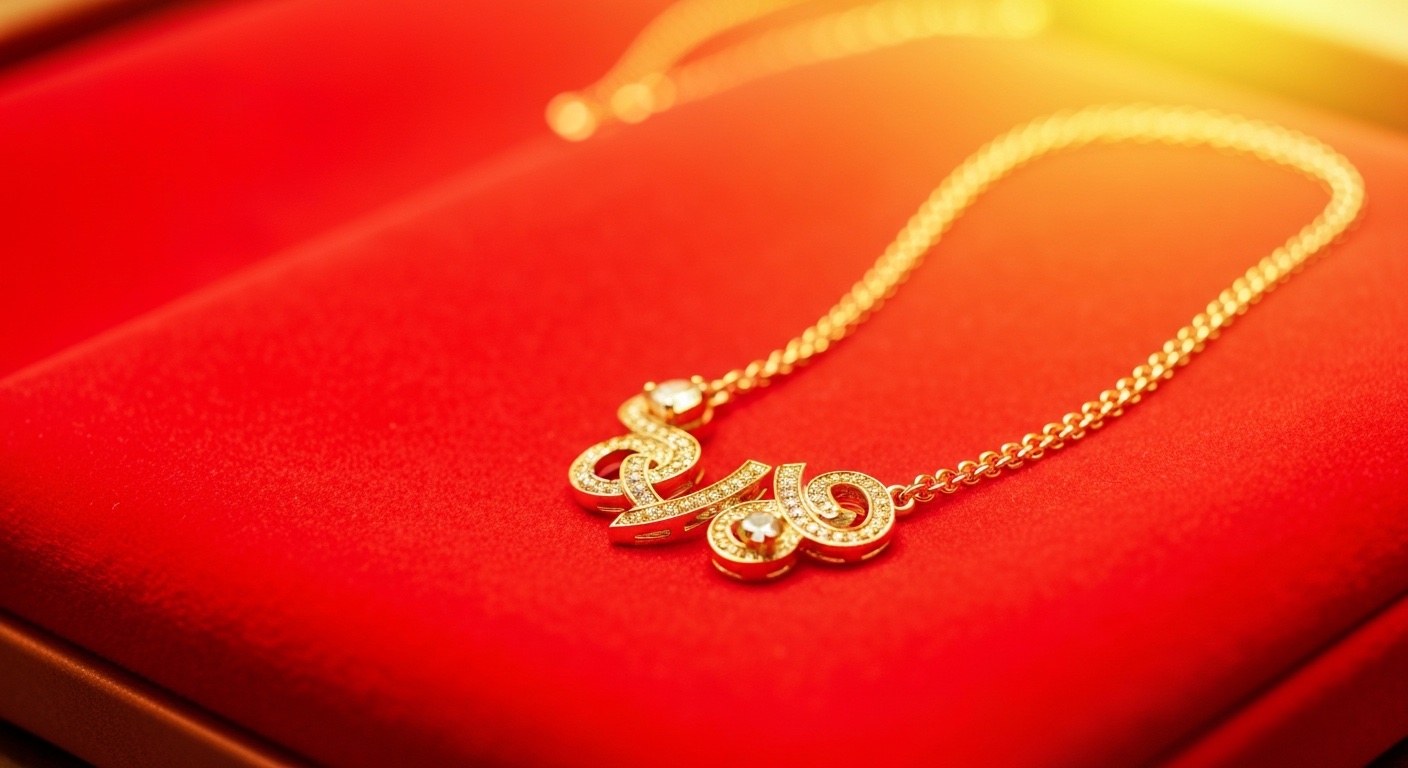
Start with weddings. In Chinese tradition, the groom gifts the bride's family with gold jewelry: bracelets, necklaces, earrings, and, in many regions, a dragon-phoenix necklace (龙凤项链). It is not decoration — it is the pin jin (聘金), the "bride price", a formal financial commitment that signals the seriousness of the proposal. In second and third-tier cities in China, families spend between 30,000 and 100,000 yuans (US$4,100 to US$13,700) just on gold for the wedding.
Then there is Chinese New Year. Gold gifts for babies and children — especially zodiac sign pendants — are a century-old tradition. Gold represents fu (福, fortune) and shou (寿, longevity). A grandmother who gives a gold bracelet to her newborn grandson is not giving a gift — she is transferring a blessing and, at the same time, a value reserve.
And it is precisely as a value reserve that gold plays its most practical role in Chinese life. China does not allow free conversion of yuans into foreign currency for most citizens. The real estate market, which for decades was the main form of savings for families, has been in crisis since 2021. The Shanghai stock market is volatile and unreliable for the average investor. What's left? Gold.
Not by chance, the Shanghai Gold Exchange (SGE) is the world's largest physical gold exchange. In 2024, the price of gold on the SGE reached a premium of US$30 to US$50 per ounce above the international price — a reflection of domestic demand that exceeded the available supply in the Chinese market.
Gold at US$5,200: how we got here
The price of gold more than doubled compared to the 2024 average. According to the World Gold Council, the 2024 average was US$2,386 per ounce, already 23% above the 2023 average (World Gold Council, Gold Demand Trends Full Year 2024). In February 2026, the metal operates above US$5,200 — an appreciation of about 118% in two years.
Three forces explain this surge:
1. Central banks buying gold like never before. In 2024, central banks around the world bought 1,044 tons of gold — the third consecutive year above 1,000 tons. In the fourth quarter of 2024, purchases accelerated dramatically to 333 tons in just three months. The People's Bank of China (PBoC) has been one of the largest buyers, adding gold to its reserves consistently as part of a diversification strategy to reduce exposure to the US dollar.
2. Geopolitical and economic uncertainty. Trade tensions between the USA and China, conflicts in the Middle East, sanctions against Russia, and the Trump government's tariff policy in 2025-2026 pushed institutional investors towards protective assets. Gold once again fulfilled its classic role as a safe haven in times of turmoil.
3. Growing investment in ETFs and bars. Total investment in gold reached 1,180 tons in 2024, a 25% increase compared to 2023. Gold ETFs, which had been losing market share since 2020, stabilized in 2024 and began to attract capital again in 2025, amplifying buying pressure.
The total demand for gold in 2024 reached a record 4,974 tons, moving US$382 billion — the highest annual value ever recorded. The total supply, adding mining and recycling, was 4,974 tons, almost in balance with demand. Any additional demand shock — such as the acceleration of purchases by central banks in 2025 — found an inelastic supply, pushing prices up.
The jewelry paradox: price rises, volume falls, revenue soars
Here is the irony of the gold market in 2024-2026. Global consumption of gold jewelry fell 11% in volume, to 1,877 tons, in 2024. Consumers simply could not buy the same amount of gold with high prices. But the total spending on gold jewelry rose 9%, to US$144 billion. People bought fewer grams but paid more for each one (World Gold Council).
For Chow Tai Fook, this paradox translates into a complex equation. The company predominantly sells 24-karat gold, priced by weight. When gold rises 33%, the price of a 10-gram necklace jumps proportionally. The company's margins on pure gold are relatively thin — usually between 8% and 15% over the spot price, depending on the design and brand. The profit comes from volume and the workmanship fee (gongfei, 工费) charged on each piece.
With gold above US$5,000, a simple 20-gram bracelet that cost about 6,000 yuans in 2023 now costs more than 8,000 yuans. For many Chinese families — especially those in smaller cities, where the gold tradition is stronger — this represents a direct impact on wedding budgets and festive gifts.
Chow Tai Fook has responded in two ways. First, by launching pieces with more elaborate designs and lower gram weight — the "Heritage" collection and the "Joie" line, for example, value the craftsmanship over the mass of gold, allowing more affordable prices per piece. Second, by expanding its online presence and in third and fourth-tier cities, where competition is less and brand loyalty is strong.
The PBoC and the global gold race
The People's Bank of China is not buying gold on a whim. The strategy is part of a structural realignment of China's international reserves, which have historically been dominated by US Treasury securities. China holds more than US$760 billion in Treasuries — but has been gradually reducing this position since 2018.
The reasoning is geopolitical: after the Western sanctions that froze US$300 billion in reserves of the Russian central bank in 2022, China realized that dollar-denominated assets held in Western custody represent a risk. Physical gold, stored in vaults on national territory, is immune to sanctions.
And China is not alone. Turkey, India, Poland, Singapore, and dozens of other central banks have accelerated gold purchases in the last three years. The movement is so significant that the World Gold Council describes it as a "structural change" in global demand for gold.
For the jewelry market, central bank purchases have a direct side effect: they compete for the same available physical gold supply. When a central bank buys 333 tons in a quarter, as happened in Q4 2024, that is gold that does not go to jewelry stores, foundries, or ETFs. The pressure on prices is inevitable.
What changes for Brazilian investors
Brazil is not a traditional gold jewelry market in the Chinese mold, but the surge in the precious metal affects Brazilian investors in various ways.
First, there is gold as an investment asset. The gold contract on B3 (OZ1D) follows international prices, adjusted by the real/dollar exchange rate. With gold above US$5,200 and the dollar at high levels against the real, the Brazilian investor who bought gold two years ago has seen their wealth more than double in reais. International ETFs such as SPDR Gold Shares (GLD) and iShares Gold Trust (IAU) offer exposure without the need for physical custody.
Second, Brazilian gold mining companies — such as Aura Minerals, which operates in Brazil, Mexico, and Honduras — benefit directly from high prices. The operating margins of gold mining companies expand significantly when the price of the metal rises, as extraction costs (AISC, all-in sustaining cost) do not follow in the same proportion.
Third, high gold prices affect the exchange rate and capital flows. Chinese demand for gold drains dollars from the global financial system, while the PBoC's reserve diversification reduces demand for US Treasuries — which, in the end, may pressure the dollar and affect the real.
For those who follow China, the relationship is direct: the Chinese appetite for gold, whether from consumers in jewelry stores or the central bank in vaults, is today one of the main price formation vectors of the metal in the world.
7,000 stores, 97 years, one metal
Chow Tai Fook has survived wars, revolutions, financial crises, and pandemics. It has done so by selling the same thing it has been selling since 1929: gold. The company's name — "great fortune" — has never been so literal. With the metal at the highest levels in history, each gram in its 7,000 store windows is worth more than ever.
But fortune has two sides. High prices mean higher nominal revenues, but they also mean consumers buying less, smaller pieces, and couples reconsidering the tradition of pin jin. The challenge for the world's largest jewelry store in the coming months will be to balance tradition and accessibility — to sell the blessing of gold without it costing a fortune.
What seems certain is that gold will not be cheap anytime soon. With central banks accumulating, geopolitical tensions persisting, and the Chinese economy seeking alternatives to the dollar, the buying pressure continues to be strong. Chow Tai Fook, with almost a century of experience reading the Chinese gold market, knows this better than anyone.
Want to understand how China's movements affect your investments and the global market? China to Watch translates the decisions of Beijing, Shanghai, and Shenzhen for those who need analysis, not headlines. Follow our publications and stay ahead of trends.