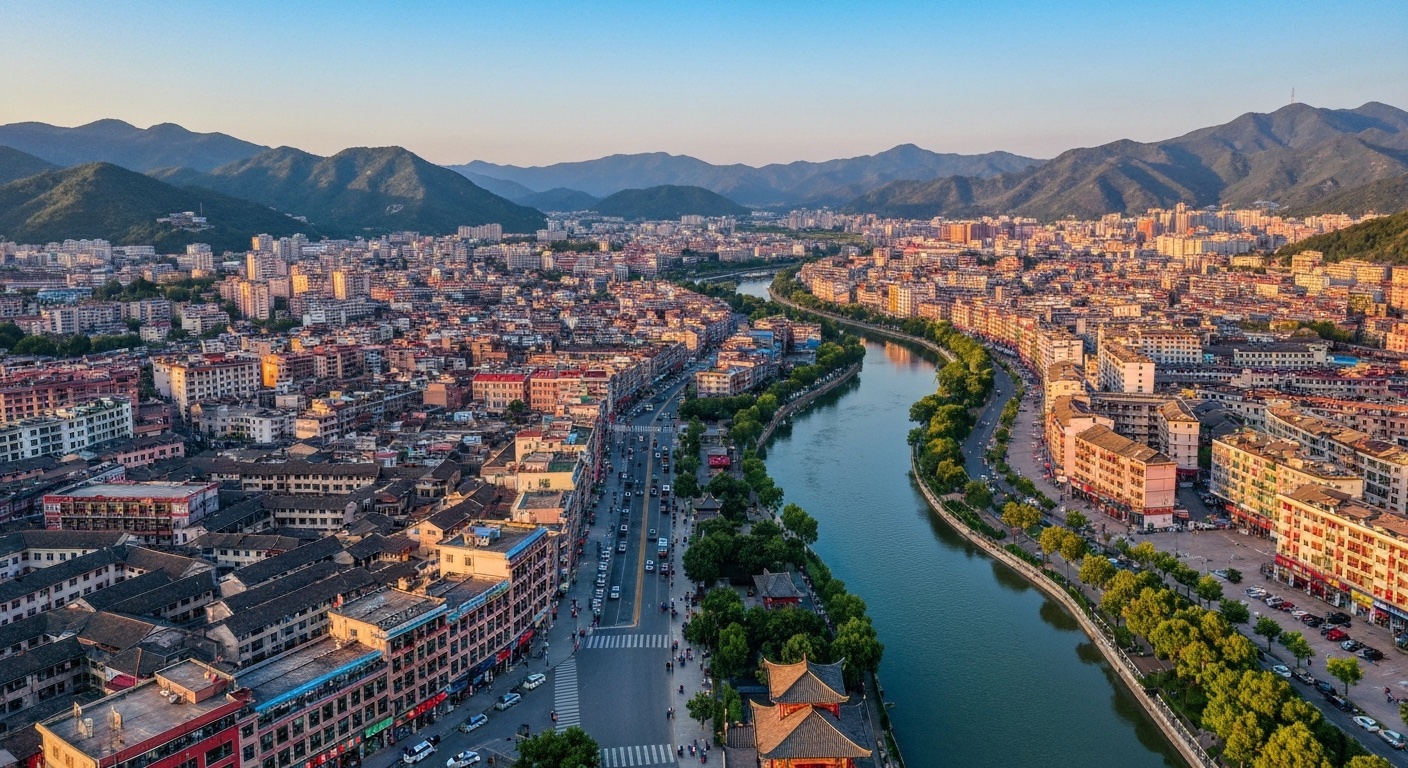
Arriving in China from Brazil is like landing on a planet where gravity works differently. Here in Kunshan, an industrial city in Jiangsu province, 50 minutes from Shanghai, I spent months ceasing to be surprised by things that Chinese people consider absolutely normal. From the night security that seems like science fiction to someone who has lived in Rio or São Paulo, the total absence of cash on the streets, and a work pace that makes Brazilian corporate culture seem like a vacation, China dismantles prejudices and reconstructs its understanding of efficiency and social organization around every corner. I have singled out thirteen of these revelations that have changed my mind since I moved here, mixing what I live day to day with data that confirm that I am not crazy. I am just in 中国 (Zhōngguó).
Night security that defies all Brazilian logic
In Brazil, walking with a cell phone in hand at night is asking to be robbed. In China, especially in cities like Kunshan, Shanghai, or Beijing, women go out alone at three in the morning with their cell phones in their ears and no one thinks about stealing. According to reports compiled by 网易 NetEase, foreign tourists are shocked to realize that they can expose valuable goods in public spaces at night without "finding thieves", a situation unthinkable in Paris, Rome, or Rio de Janeiro.
What explains this? Facial recognition cameras everywhere, effective policing, and a culture where violent crimes are very rare. 人民网 People.cn reported that the sense of security (安全感 ānguán gǎn) is one of the pillars of national pride. For me, a Kunshan resident, it still gives me a knot in my head to see eight-year-old children going to school on the subway alone. In Brazil, this would be national news. Here it's Tuesday.
The sense of freedom that comes with it is addictive. You stop looking around. You stop calculating escape routes. You can focus on life instead of urban survival. It's a relief of weight that you didn't know you were carrying until you let it go here.
The Chinese work pace that makes the Brazilian seem lazy
Giorgio Sinedino, a Brazilian who has lived in China for years, summed it up perfectly in an interview with 搜狐 Sohu: in Brazil, you send a work message and wait two weeks for a response without anyone taking offense. In China, if you don't respond in ten minutes, they think you're dead. This difference in speed hit me like a brick when I arrived in Kunshan.
The concept of 加班 (jiābān), almost cultural unpaid overtime, is real. Many Chinese professionals do not take their families to foreign posts because work consumes life, something that Brazilians from my local company initially interpreted as cultural indifference, according to an analysis by 王文 Wang Wen published on Sohu.
The surprise here is that it's not just about efficiency. It's a collective work ethic where the group matters more than the individual. In Brazil, we value the "jeitinho" and flexibility. Here, there is an almost military respect for deadlines and hierarchies. It took me months to understand that when a Chinese person says "I'll see" (我看看 wǒ kànkan), it usually means "no", but they are preserving their 面子 (miànzi, face). In Brazil, we would be more direct. Here, being indirect is the standard.
The death of cash and the rise of the QR Code
I arrived in China in 2019 with cash in my wallet. Today, years later, I don't know where my physical wallet is. Mobile payment via 支付宝 Zhīfùbǎo (Alipay) and 微信 Wēixìn (WeChat) is so ubiquitous that even beggars on the street accept transfers via QR Code. According to an article from 新浪财经 Sina Finance, Canadian and American tourists are puzzled to discover that they can live without cash for months, using only their cell phones for everything.
The double shock for Brazilians is that the technology works. Second, the entire society has adapted to it in less than ten years. I remember trying to pay for a bottle of water for five yuan (about four reais) with cash and the seller looking at me as if I were trying to pay with shells. The speed of technological adoption reflects Chinese pragmatism. If it works, it is adopted immediately. In Brazil, we are still discussing whether Pix is safe. Here, the debate ended a decade ago.
Even Buddhist temples and charity donations work via QR Code. Physical money has become a thing of the elderly and uninformed tourists. The zero friction of transactions changes your relationship with consumption. It's dangerous because you spend without feeling it. But it's wonderful for the convenience.
The high-speed train that makes speed seem normal
The 高铁 (gāotiě), the Chinese high-speed train, is the largest network on the planet, built mainly in the last fifteen years. Living in Kunshan, I take the train to Shanghai in eighteen minutes. Eighteen. By car, it would take two hours in traffic. Americans visiting China say, according to 搜狐 Sohu, that they seem to have "traveled in time to twenty years into the future" when comparing with the US railway system.
For Brazilians, the surprise is not just the speed. It's the surgical punctuality. If the train leaves at 14h03, it leaves at 14h03. There is no "technical delay" or "signaling problem" that lasts for hours. 新华社 Xinhua often highlights these feats as symbols of "progress of the era". The contrast with São Paulo's CPTM or Rio's subway is depressing.
Here, public transport is not an option for those who don't have a car. It's the best option, period. The cleanliness of the stations, the silence of the carriages, and the frequency of trains (every ten minutes on main routes) make the car an unnecessary burden. You never want to drive again after experiencing this.
The safety logic that allows dangerous machines without visible protection
This scared me at first. In China, it is common to see workers using heavy equipment, such as industrial drills or cutting machines, without the PPEs that would be mandatory in Brazil. According to a report by 网易 NetEase, foreigners are puzzled to see Chinese people operating machinery "without any apparent safety measures, as if it were the most normal thing in the world".
The cultural shock here is about pragmatism versus bureaucracy. In Brazil, we have a huge occupational safety industry. Here, there is a trust in individual common sense that may seem irresponsible, but reflects a different culture of responsibility. I'm not saying it's better or worse. I'm saying it's strange to see a guy balanced on a bamboo scaffolding on the tenth floor without a belt.
Chinese productive efficiency sometimes ignores what we call "overzealousness" in the West. The result is works that move fast, but with a calculated risk that makes the Brazilian's heart tremble. You learn not to look down when you pass by construction sites.
The collectivism that changes how people see you
In Brazil, we are trained to be unique, special, individuals. In China, you are part of a whole. This appears in small details, such as social pressure not to stand out negatively, to major issues like the family-work relationship. As 王文 Wang Wen noted in an analysis for Sohu, Brazilians often interpret the extreme dedication to work of the Chinese as "coldness" or lack of family love, when it is actually an expression of different love.
The surprise comes when you realize that collectivism works. When a Chinese person says they are going to do something for the group, they do it. In Brazil, we have more flexibility to change our minds. Here, your word has immense social weight. The concept of 关系 (guānxì), a network of relationships, determines opportunities more than any resume.
For a Brazilian accustomed to "being himself", learning to read the group before acting is a steep learning curve. Here, the nail that sticks out is hammered first. The harmony of the group is more than individual truth. It's a deep mindset adjustment.
The street food that is at the same time suspicious and glorious
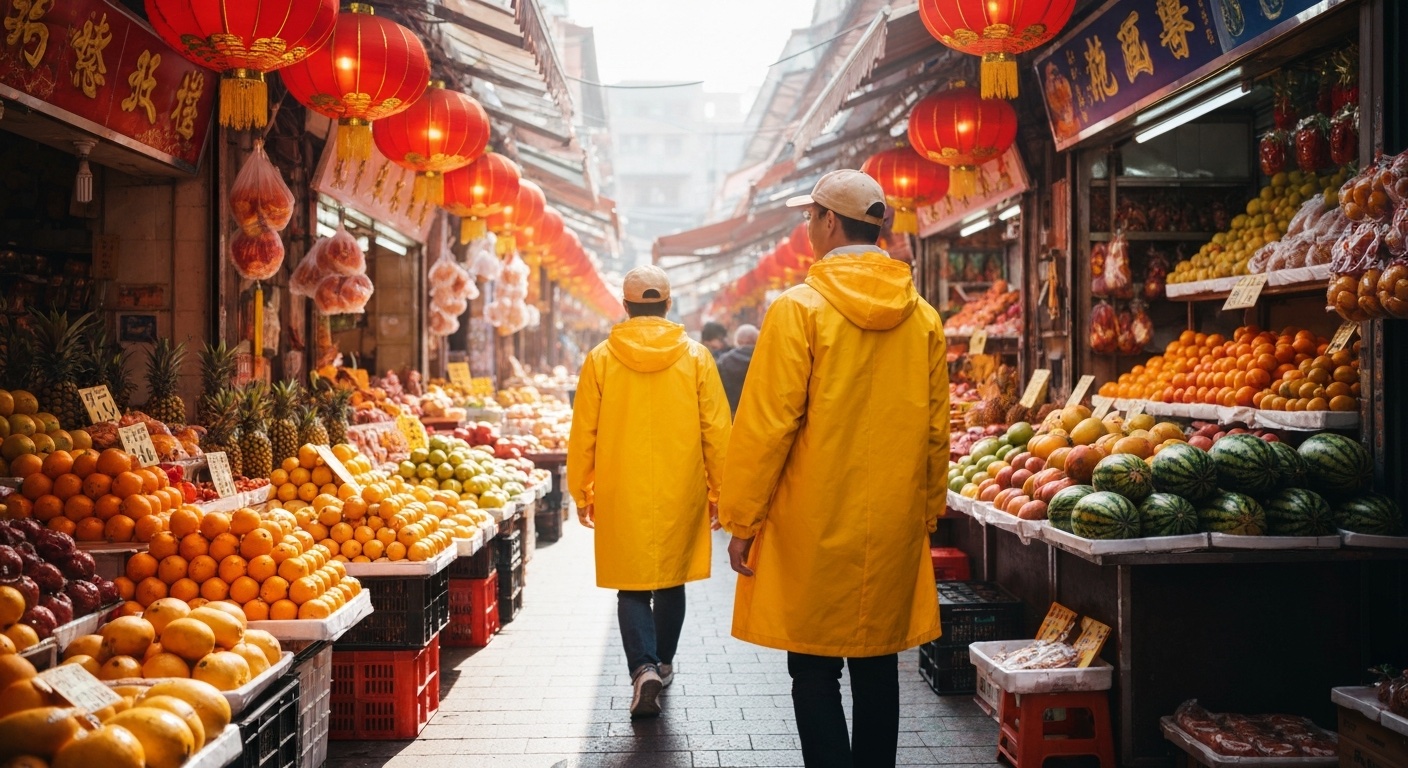
Every Brazilian arrives in China afraid of street food. And every Brazilian ends up eating dumplings at three in the morning at a stall that looks unsanitary but serves the best food of their life. According to reports from tourists on 腾讯新闻 Tencent News, the "smoke atmosphere" (烟火气 yānhuǒ qì) of Chinese streets, with food being made on the spot, is one of the most authentic experiences.
The shock is the trust in the non-existent cold chain. You see meat exposed to the sun, fish still alive in tanks, and think "that would be an absurd fine in Brazil". But you don't get sick. The public health system and supervision work differently. And yes, the food is incredibly cheap and tasty.
A full dinner in Kunshan costs the equivalent of fifteen reais. In São Paulo, it would be sixty. The cost-benefit ratio of food is absurd, and the smoke signal coming from the woks at night is the smell of home for me now. You learn to trust the chef's eye more than the health license.
The real difficulty of learning Mandarin beyond the basics
Everyone knows that Chinese is difficult. But the surprise is how difficult it is in daily practice. It's not just the tones. It's the dialects. Living in Kunshan, which is in Jiangsu province, the local accent is so different from standard Mandarin that it seems like another language. According to videos on 哔哩哔哩 Bilibili, foreigners often get confused with regional variations of pronunciation that turn simple words into enigmas.
The shock comes when you think you've learned to order beer (啤酒 píjiǔ) and the waiter looks at you without understanding because you spoke with the wrong tone and said "penis" (皮鸡 pí jī). Yes, it happened to me. The tonal precision is relentless.
And the alphabet? Forget it. You need to memorize thousands of characters to read a full menu. The language barrier is greater than in any other country I've visited. Even with translation apps, the feeling of functional illiteracy is constant and humiliating in the first few months. You feel like a child again.
The technology that seems like science fiction and the everyday life that seems like the 80s
China is a country of violent technological contrasts. You pay for coffee with facial recognition, but the postman still uses bicycles with huge baskets to deliver mail. According to technological development analyses on 新华网 Xinhua, the digital leap was so fast that old infrastructures coexist with delivery robots.
For Brazilians, this is confusing. You expect a country with driverless metros and smart electric cars to have an agile banking system. But opening a bank account here still requires an absurd amount of paperwork, physical seals (印章 yìnzhāng), and bank lines that remind of the 90s in Brazil.
The Chinese bureaucracy in traditional sectors is as slow as the innovation in technological sectors is fast. You never know if you're in the future or the past when you leave a cashier-less supermarket (future) and enter a public office (past). It's a time roller coaster.
The honesty of taxi drivers and sellers that defies stereotypes
Before coming, I heard a lot that Chinese people would try to cheat me because I am a foreigner. The reality was the opposite. According to reports from tourists on 网易 NetEase, "even when they could cheat, taxi drivers don't do it". Once, I left my cell phone in a taxi in Shanghai. The driver came back forty minutes later to return it. He refused a tip. He said it was "the right thing to do".
In Brazil, especially in tourist areas, the tourist is an easy target. In China, there is a surprising code of conduct on honesty in commercial transactions. Of course, there are scams, especially online. But in real life, integrity is culturally valued.
The surprise is to discover that the stereotype of the "smart Chinese" is, at best, imprecise. They are pragmatic, not dishonest. If they agreed on a price, it is respected. There is no bargaining dance as in Brazil or India. The price is the price, and it is fair. This saves mental energy.
The physical transformation of cities every six months
Kunshan, where I live, changes its face faster than I change my clothes. A building is demolished and another emerges in three months. According to historical data from 新华社 Xinhua on urban development, China has built more infrastructure in two decades than many countries in a century. For a Brazilian accustomed to works that last decades (like the metro of Salvador or the transposition of São Francisco), the speed is incomprehensible.
The surprise comes when you realize that there are no protests against works. People accept the sandbox and the noise as necessary progress. In Brazil, a two-year work generates ten demonstrations. Here, the state acts with an authority that allows rapid execution.
Is it efficient? Yes. Is it democratic in the Western sense? Questionable. But as a resident, seeing a new subway line emerge in real time is addictive. You wake up and have a new shopping mall. You sleep and a bridge is born. The concept of "construction time" is different here. Everything is urgent and everything is possible.
The deafening silence of crowded public spaces
This is bizarre. You enter a crowded Shanghai subway at eight in the morning and hear... nothing. People don't talk. There is no loud music on headphones. There is a respect for collective sonic space that is nonexistent in Brazil. According to behavioral observations in videos on 哔哩哔哩 Bilibili, foreigners notice that Chinese people maintain social distance through silence in public places.
In Brazil, the bus is a space of interaction, noise, life. Here, it is a temple of silent contemplation. The surprise is to realize that this is not coldness. It is consideration. No one wants to bother the other.
The result is a strange peace in the midst of the chaos of millions of people. It took a year for me to stop thinking that people were in a bad mood because they didn't talk. They are being polite in their way. Silence is the oil that lubricates the high-density social machine.
The discovery that you will have to choose between loving or hating, there is no middle ground
I arrived in China thinking it would be a temporary experience. After living here for a few years, you either embrace the local logic and live well, or resist and suffer. You can't stay in the middle. As 高文勇 (Evandro Menezes de Carvalho) said in an interview with 人民网 People.cn, the secret is the "spirit of openness and tolerance". You have to want to like it.
The final surprise is realizing that China doesn't want you to adapt. It doesn't change to accommodate foreigners. You are the one who has to change. And when you accept that, when you stop comparing with Brazil every second, you discover an efficiency and a quality of life that you didn't imagine possible.
But this requires humility. There is a reason why so many Brazilians leave before a year. And there is a reason why those who stay, like me, can no longer imagine living anywhere else. China is a shock of reality that either breaks you or rebuilds you better. There is no lukewarm water here. And that's exactly what makes the difference.
Publication sources
- 中国日常生活的文化差异与外国人视角 ↗
- 外国人眼中的中国:奇闻异事与文化差异 ↗
- 那些老外受到的中国文化冲击,他震惊了!_哔哩哔哩_bilibili ↗
- 《感受中国:外国人在我国的居住体验与观察》 ↗
- Living in China as a Foreigner: Safety and Security Considerations ↗
- 巴西人如何看中国, 巴西网友: 新兴的超级大国 ↗
- 中国文化在巴西的传播与影响 ↗
- 文化传播 ↗
- 中国—巴西 "发展中大国关系"典范及其全球治理意义 ↗
- 当'中国'与'巴西'相遇 ↗
- 从上海开始China Travel ↗
- China Travel ↗
- 70年代工资每个月80元,一家8口人都能养活?你信吗_手机网易网 ↗
- 【把党的十九大精神全面落实在重庆大地上】"榜样面对面"进村宣讲 ↗
- 我以为我是来体验中国的'落后',结果发现是我自己'穿越'回了20年前的美国。 ↗