The Largest Buddhist Temple in Hangzhou is Full — and It's Not Due to Tourism
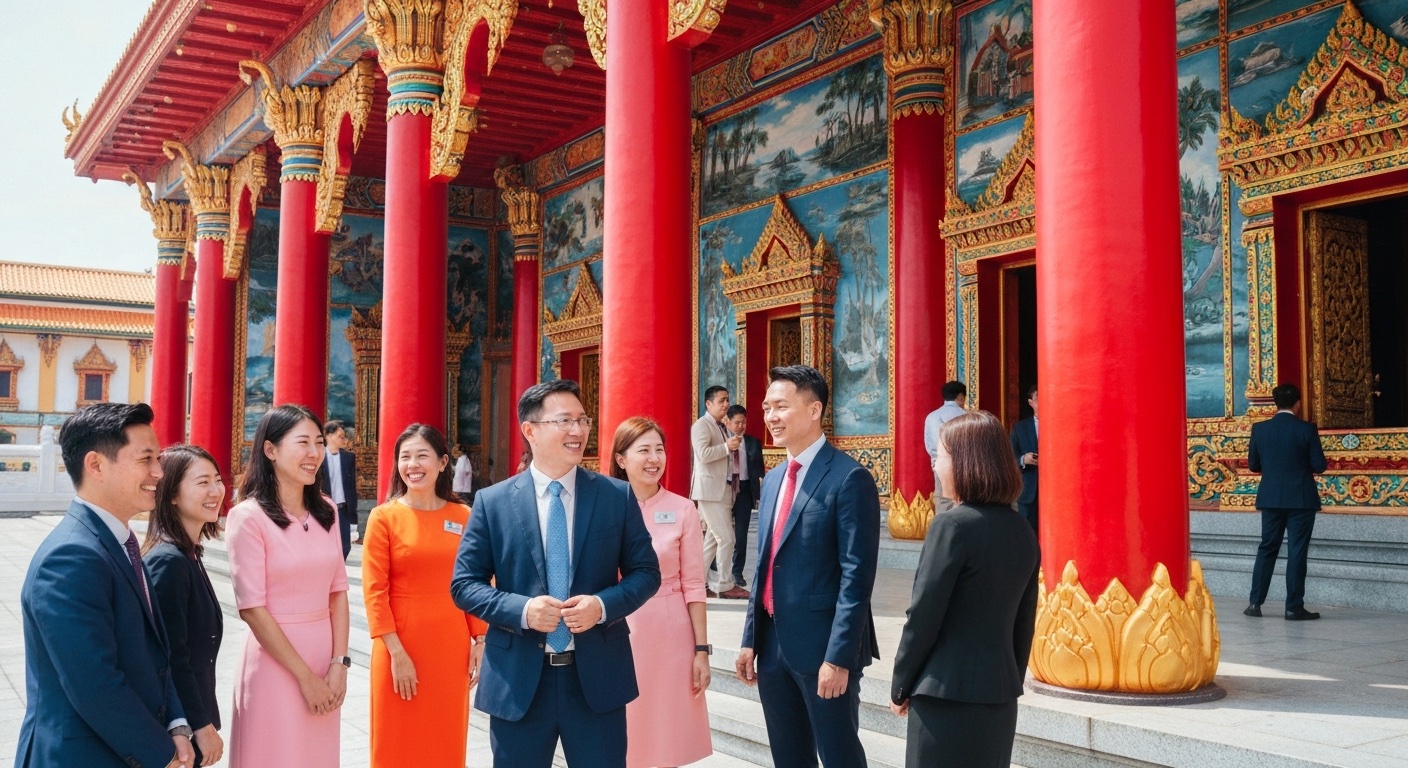
During the Chinese New Year holiday in 2025, the Lingyin Temple (灵隐寺) in Hangzhou recorded more than 1.1 million visitors in just seven days. The number, released by the temple administration and widely shared on Weibo, represents an increase of about 30% compared to the same period in 2024. The detail that caught attention was not the volume itself — temples always fill up during the Spring Festival — but the profile of the visitors: entrepreneurs, factory owners, e-commerce traders, and self-employed professionals made up most of the kilometer-long queues.
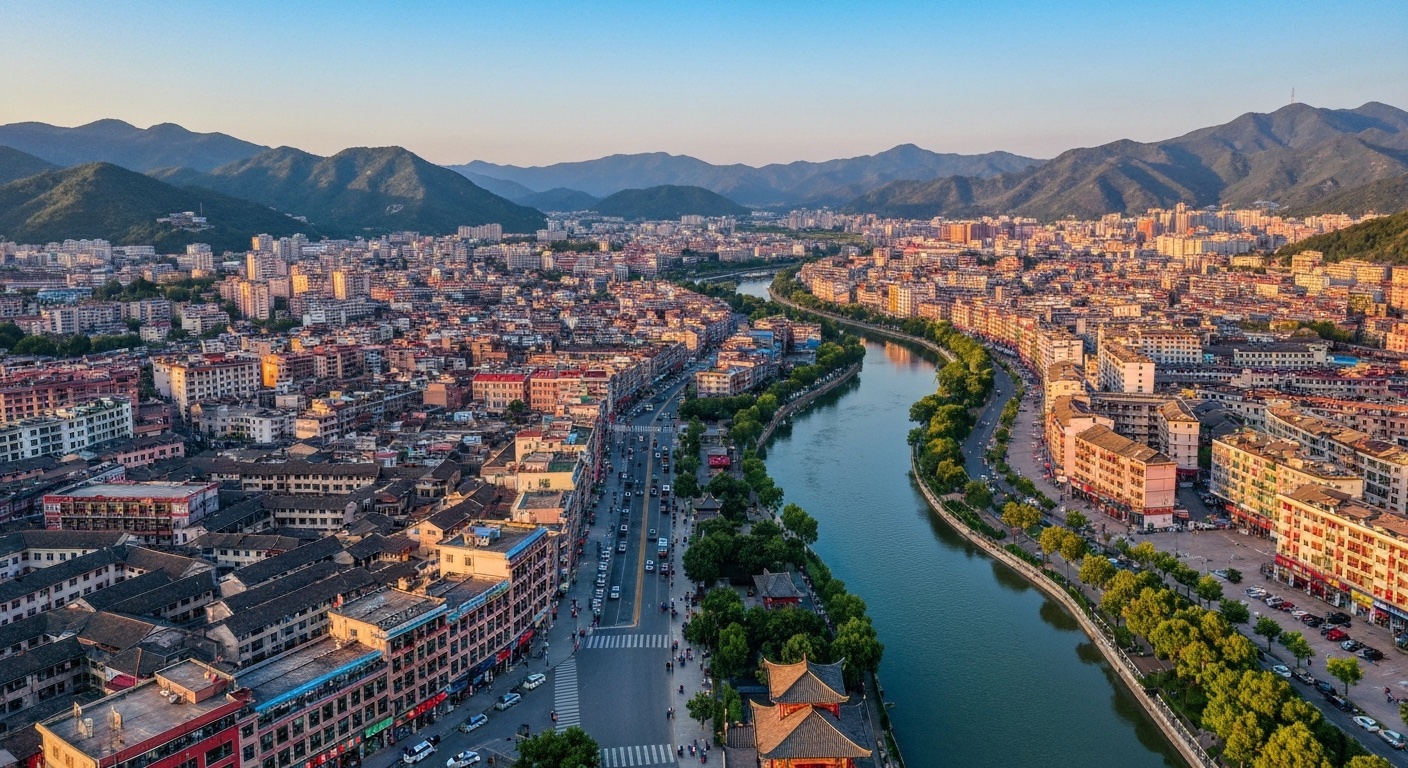
The Lingyin Temple is not just any temple. Founded in 328 AD during the Eastern Jin Dynasty, it is one of the oldest and most prestigious Chan Buddhist monasteries in China. It is located at the foot of the Wulin Mountains, on the outskirts of Hangzhou — the same city that hosts the headquarters of Alibaba. The proximity to the heart of Chinese digital entrepreneurship is not a coincidence. For millions of entrepreneurs in the Yangtze River Delta region, Lingyin is the reference temple when seeking spiritual protection for business.
Burning Incense as an Economic Indicator
In China, there is a saying that became a meme and then turned into a serious analysis: the "incense index" (香火指数, xiānghuǒ zhǐshù). The logic is straightforward: the more people burning incense at temples, the greater the perceived economic uncertainty by the population. In 2023, when the Chinese economy stumbled in the post-Covid recovery, religious tourism grew by 300% compared to 2022, according to data from the Ministry of Culture and Tourism. Temples had more visitors than theme parks.
In 2024, the trend solidified. The Yonghe Temple in Beijing had to implement an online reservation system to control overcrowding. The Jade Buddha Temple in Shanghai registered queues of up to 4 hours on the first day of the lunar year. And Lingyin in Hangzhou had already broken records. Now, in 2025, the numbers have gone up another notch.
This is not just about traditional faith. Researchers from Peking University published a study in 2024 showing that the frequency of temple visits among the economically active population (25 to 50 years old) increased by 47% between 2021 and 2024. Which group grew the most? Individual entrepreneurs and owners of small and medium-sized businesses.
What Business Owners Ask For — and What It Reveals
If you pass by Lingyin during the Spring Festival, you will notice something curious on the wooden boards where the faithful write their requests (许愿牌, xǔyuàn pái). Instead of prayers for health or marriage, most requests revolve around money, contracts, and business survival. "May my factory not close," "May orders return," "May the government not change the rules again" — phrases like these were photographed and went viral on Weibo and Xiaohongshu.
The hashtag #企业家烧香 (entrepreneurs burning incense) has accumulated more than 800 million views on Weibo by February 2025. It became one of the most discussed topics of the Spring Festival, even surpassing memes about CCTV's New Year's Gala.
What lies behind this collective anxiety? A combination of factors that anyone following the Chinese economy knows, but which rarely appear in official discourse:
- Persistent deflation: China's Consumer Price Index (CPI) remained in negative territory or close to zero for most of 2024. In January 2025, the CPI registered -0.2% year-on-year, according to the National Bureau of Statistics (NBS).
- Unresolved real estate crisis: new home sales fell by 17.6% in 2024, and developers like Evergrande and Country Garden continue to undergo judicial restructuring. For millions of Chinese, real estate was the main store of value.
- High youth unemployment: the unemployment rate among 16 to 24-year-olds reached 18.8% in August 2024, before the government temporarily suspended the release of the data (and later resumed it with revised methodology).
- Unpredictable regulation: between 2021 and 2023, entire sectors — technology, private education, games, fintech — were subjected to regulatory waves that destroyed trillions of dollars in market value.
- Trade war with the US: tariffs, chip sanctions, and export restrictions continue to compress the margins of export-oriented companies.
The Government Says Everything is Fine. The Street Disagrees.
The contrast between official rhetoric and popular sentiment is striking. In December 2024, the Central Economic Work Conference — the main annual economic policy meeting of the Communist Party — set the tone for 2025 as "stability with progress". The GDP for 2024 would have grown by about 5%, in line with the target. Everything according to plan.
But the entrepreneurs who fill the temples tell another story. In a survey by the European Chamber of Commerce in China, released in September 2024, 68% of European companies in the country reported that doing business had become more difficult. The business confidence index of the Chinese private sector, measured by Tsinghua University in partnership with Caixin magazine, fell to its lowest level in five years at the end of 2024.
There is a gap between aggregate GDP and the daily experience of those who run a business in China. GDP may grow by 5%, but if deflation eats away at profit margins, if consumers do not spend, if banks tighten credit to SMEs — the entrepreneur on the ground feels a recession that the macro numbers do not capture.
It is in this void between official data and lived reality that the temple serves as a pressure release valve.
Chinese Business Superstition: Much More Than Folklore
To understand why Chinese business owners turn to temples, it is necessary to go beyond the cliché of "Asian superstition". The relationship between business and spirituality in China has millennia-old roots and continues to thrive in contemporary corporate culture.
The god of wealth (财神, Cáishén) is one of the most popular deities in the Chinese popular pantheon. His image is in almost every shop, restaurant, and factory in the country. On the fifth day of the Chinese New Year — called "the day of receiving the god of wealth" (迎财神, yíng Cáishén) — millions of people set off fireworks and burn incense to attract prosperity. In Hangzhou, Lingyin is the epicenter of this ritual.
But Chinese business spirituality goes beyond Cáishén. Feng shui practices determine the layout of offices and the opening dates of companies. Numerology influences prices, phone numbers, and even company names — the number 8 (八, bā), which sounds like "prosper" (发, fā), is worth its weight in gold. Jack Ma, founder of Alibaba, consulted feng shui masters before making strategic decisions, according to widely known reports in the Hangzhou tech ecosystem.
When economic rationality does not provide answers — when the government changes the rules without warning, when the market does not respond to stimulus, when the future seems opaque — spirituality fills the void. It is not irrationality. It is pragmatism with other tools.
The "Incense Economy" Moves Billions
This phenomenon has its own economic side. The religious tourism market in China was estimated at 68 billion yuan (about US$ 9.4 billion) in 2024, according to consulting firm iResearch. This includes temple entrance fees, accommodation, religious products, protection bracelets, and even Buddhist meditation apps.
The Lingyin Temple charges 75 yuan (about R$ 55) for entry. With 1.1 million visitors in a week, that is at least 82 million yuan (R$ 60 million) in ticket revenue during the Spring Festival period — not counting donations, which are usually significant. Smaller temples in the Zhejiang region reported revenue increases of 40% to 60% in 2025 compared to 2024.
The Buddhist prayer bead industry (佛珠手串, fózhū shǒuchuàn) has exploded. On Taobao, sales in this category grew by 320% in 2024 compared to 2022, according to platform data. The best-selling items? "Business protection" bracelets and "investment luck" amulets.
Parallels with Brazil: When Faith Becomes a Thermometer
For the Brazilian reader, this phenomenon may seem distant, but the dynamics are familiar. Brazil has its own version: the explosion of attendees at neopentecostal churches during economic crises. In the 1990s and 2000s, the growth of the Universal Church of the Kingdom of God coincided precisely with periods of hyperinflation, high unemployment, and uncertainty — reaching especially microentrepreneurs and informal workers.
The Brazilian prosperity theology and Chinese business spirituality share a structure: when the formal economic system fails to offer predictability, people seek alternative systems of meaning and control. The Buddhist temple in Hangzhou and the evangelical church in São Paulo perform surprisingly similar social functions — offering community, hope, and the feeling that the individual can influence their destiny when macro forces seem uncontrollable.
The difference is that in China, the phenomenon occurs in a context of state atheism, which makes the rush to temples even more significant as an indicator of malaise. When citizens of a country governed by an officially atheist party fill Buddhist temples to ask for their businesses to survive, something very profound is happening in the economy that official numbers cannot hide.
What to Expect: 2025 as a Test Year
The Chinese government announced a series of stimulus measures at the end of 2024: interest rate cuts, easing of mortgage rules, and refinancing packages for local government debt worth 10 trillion yuan (US$ 1.4 trillion). In January 2025, the People's Bank of China (PBOC, China's central bank) reduced the reserve requirement ratio for banks by 0.5 percentage points, releasing about 1 trillion yuan in liquidity.
But monetary stimuli do not solve a confidence problem. Economic theory calls this the "liquidity trap" — when even low interest rates do not make people spend or invest because the future expectation is negative. Japan experienced this in the 1990s and 2000s. China may be entering the same cycle.
For the entrepreneurs who filled Lingyin in February 2025, the issue is not abstract. It is concrete: will I be able to pay my employees in March? Will there be orders in the second quarter? Will the government create some new regulation that makes my business model unviable?
As long as these questions do not have answers, the temples will continue to be full. The incense will continue to burn. And the "incense index" will continue to be one of the most honest — and uncomfortable — indicators of the Chinese economy.
Why This Matters for Those Who Follow China
The image of 1.1 million people crammed into the Lingyin Temple during the Spring Festival is more than a cultural curiosity. It is a qualitative data point that complements — and in many cases contradicts — official quantitative data. When the world's largest e-commerce platform is born in the same city where entrepreneurs fill a 1,700-year-old temple asking for their businesses to survive, we are faced with a contradiction that defines contemporary China.
For investors, exporters, and anyone doing business with China, this signal matters. The anxiety of Chinese entrepreneurs does not stay within the country's borders: it affects purchasing decisions, payment deadlines, appetite for risk, and demand for Brazilian commodities.
Truly following China requires looking beyond GDP. It requires looking at what people do when they think no one is counting.
Want to understand the China that does not appear in reports? China to Watch translates the signals that the market ignores. Subscribe and receive weekly analyses connecting what happens in China with what matters to Brazil.
Publication sources
- Wikipedia — Lingyin Temple ↗
- National Bureau of Statistics of China (NBS) ↗
- Ministry of Culture and Tourism of China ↗
- European Chamber of Commerce in China — Business Confidence Survey 2024 ↗
- iResearch — Religious Tourism in China Report 2024 ↗
- Weibo — Hashtag #企业家烧香 ↗
- Peking University — Study on temple attendance (2024) ↗
- People's Bank of China (PBOC) ↗