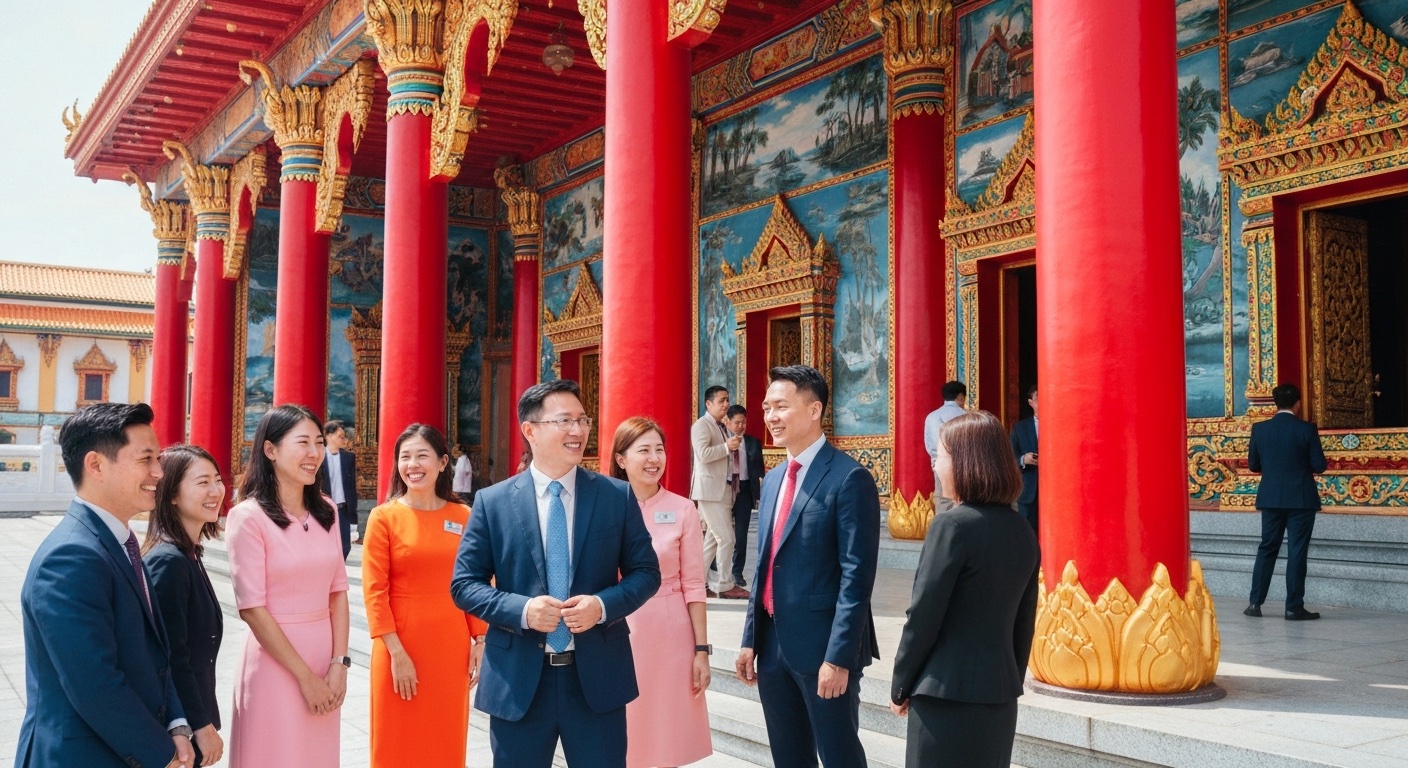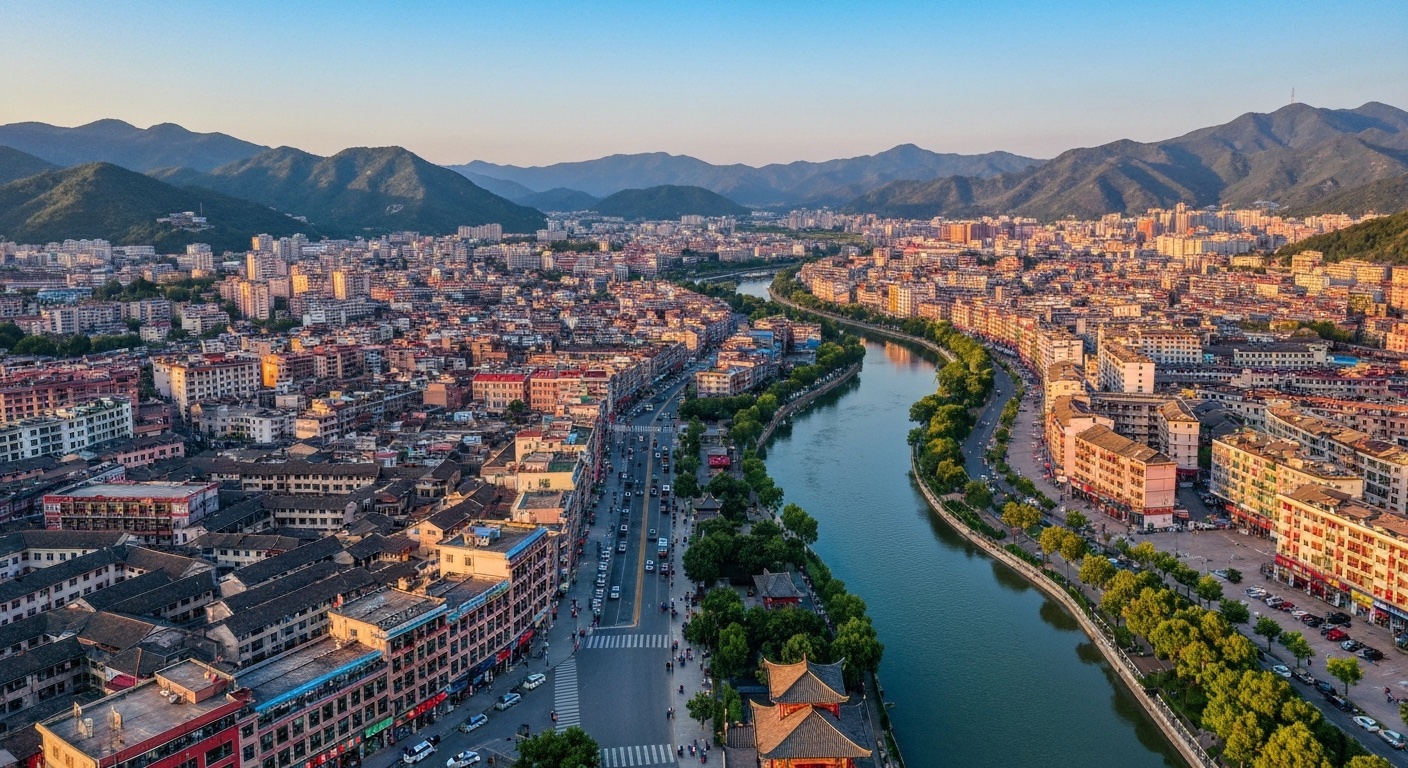
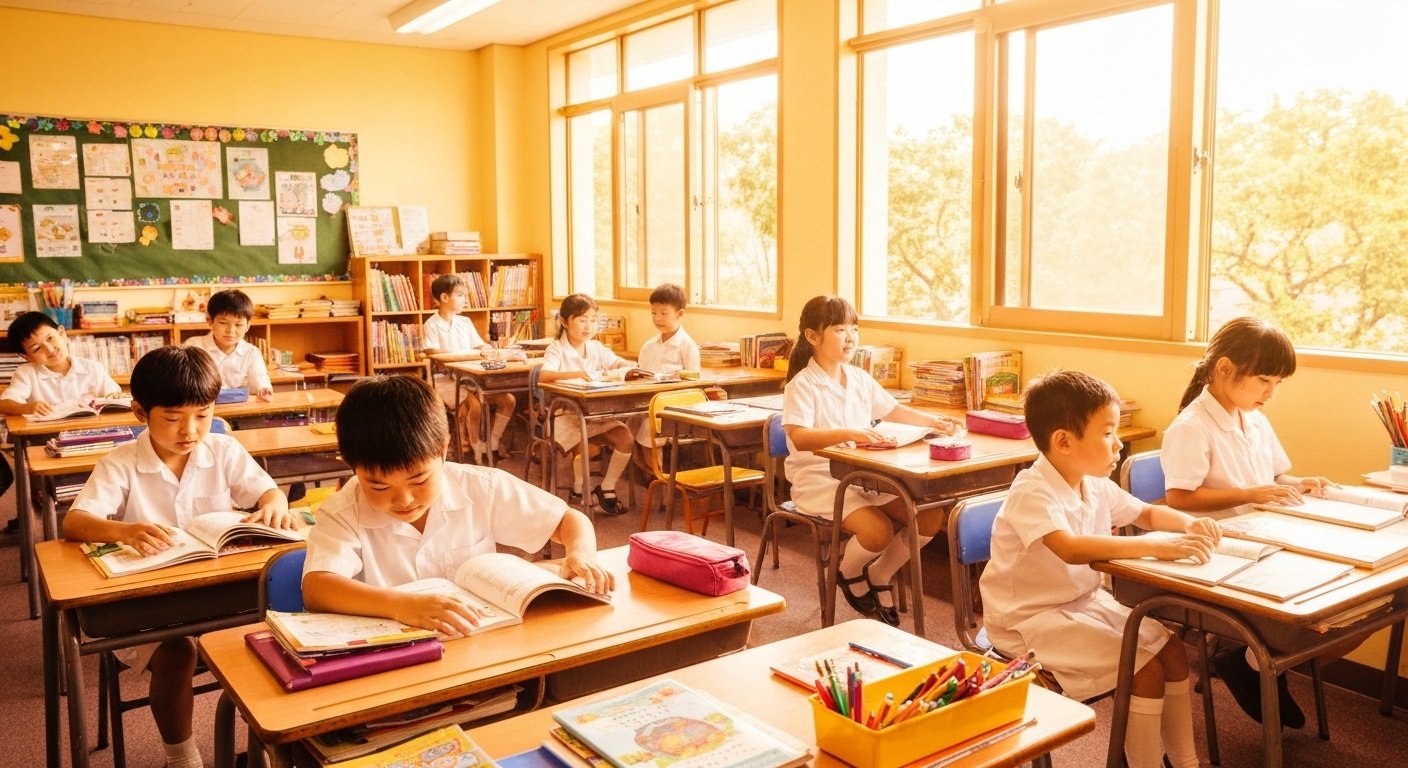
The education in China has ceased to be merely memorization and excessive pressure. Today, the country combines the world's largest STEM education system with reforms that reduce working hours and stimulate creativity. The official data from 2024 show a profound transformation that disproves the stereotype of the unimaginative robot student.
The Double Reduction policy ended the era of 15kg backpacks and tutoring until midnight
In July 2021, the Chinese government announced the Double Reduction policy (双减 shuāng jiǎn), which means "double reduction". The measure reduced homework and prohibited private education companies from profiting from mandatory school reinforcement. According to 新华社 Xinhua, the idea was to "give childhood back to children". Here in Kunshan, I saw with my own eyes the giants like New Oriental closing dozens of branches overnight.
The transformation was brutal. Before, an elementary school student could spend six hours in tutoring after school. Today, this is illegal. The local government inspects residential buildings to dismantle clandestine classrooms. Parents still complain about competitiveness, but the routine has changed. Children have time to sleep eight hours and play.
Brazil is still experiencing the peak of parallel tutoring and homework until late. In China, this model has been declared public enemy number one. The 163.com magazine reported that the discussion now is how to fill children's free time with quality activities, not more additional tests. The overload has become a crime.
Education in China trained 2.77 million STEM graduates in 2024, almost half of all diplomas in the country
The numbers are official. According to a report published on the 雪球 Xueqiu platform, in 2024 China graduated 2.77 million students in the areas of STEM (Science, Technology, Engineering, Mathematics). This represents 49.7% of the total graduates. No other country comes close to this proportion.
The quality has also improved. The 上海观察 Shobserver reported that China achieved 85.46 points on the global STEM development index, ranking second in the world, just behind the United States. But in the "educational process" category, China leads with 28.69 points, showing that the advantage lies in the way of teaching, not just the number of students.
To give you an idea, Brazil trains about 100,000 engineers per year. China trains almost thirty times more. This explains why companies like Tesla, Apple, and BMW set up research centers here. It's not just cheap labor. It's qualified labor on an industrial scale.
The Gaokao ceased to be a memorization test and became a strategic tool to force schools to teach creativity
The Chinese college entrance exam, the 高考 Gāokǎo, still exists and is still difficult. But the format has changed. According to an article on 人民网 People.com.cn, the tests now include open questions that require critical thinking. The government uses the exam as a "baton". If the test demands creativity, schools teach creativity.
In 2024, questions of applied mathematics to real situations of artificial intelligence appeared in the Gaokao of various provinces. It is not enough to memorize formulas. It is necessary to solve problems that teachers have never shown in class. This has forced about 13.4 million students to develop logical reasoning, not photographic memory.
The system is still competitive. But the logic has changed. As researcher 王辉耀 Wang Huiyao wrote in an analysis for Sohu, the old dichotomy between "exam" and "quality" is overcome. The Gaokao has become a lever to change the behavior of 300,000 schools simultaneously.
Technical schools in China are not a plan B for failures, but an elite career copied from the German dual model
The Brazilian stereotype says that those who enter technical school are those who did not pass the college entrance exam. In China, vocational education (职业教育 zhíyè jiàoyù) is a national strategy. According to data from the portal 中国教育网 Edu.cn, between 1980 and 1995, the participation of students in technical schools jumped from 19% to 56% of high school.
The country copied the German dual system (双元制 shuāng yuán zhì). Companies like Huawei and BYD maintain their own campuses where students work three days and study three days. The government classifies 2,000 institutions as "model schools" with federal budget. Training precision technicians for industry 4.0 is an absolute priority.
In Suzhou, a neighboring city to Kunshan, a semiconductor factory told me that it pays starting salaries of 15,000 yuan for technicians trained in these schools. More than many bachelor's degree holders receive in offices. The prejudice against technical education here died decades ago.
STEM Doctorates: China will produce 77,000 PhDs in exact sciences in 2025, almost double the United States
Here comes the data that scares Americans. Research from Georgetown University's Center for Technology and Emerging Security, cited on 雪球 Xueqiu, predicts that by 2025 China will train 77,179 doctors in STEM. The United States will train 39,959. The difference is almost two to one.
This changes the global game. A doctorate is not just a diploma. It is the production of new knowledge. With 77,000 researchers a year entering laboratories, China is building a critical mass of scientists capable of surpassing the West in fundamental discoveries. The news from 新浪新闻 Sina News reinforces that the country has "the world's largest higher education system".
Brazil trains a little more than 25,000 doctors a year in all areas of knowledge combined. China trains three times that in exact sciences alone. When people talk about the technological race between the USA and China, this is the number that really matters. Qualified labor in volume.
Physical education and arts ceased to be filler subjects and now count points in the Chinese college entrance exam
The myth of the Chinese who only study mathematics has died. The government published guidelines on the 国家体育总局 Sport.gov.cn portal establishing that schools must guarantee one hour of physical exercise per day. The new policy includes physical fitness tests in the Gaokao of various provinces. Running, jumping, and playing basketball now count toward university admission.
Private schools in Shanghai and Beijing compete to see who has the best soccer field, not just the best chemistry lab. The mandatory curriculum includes music, visual arts, and manual work. The Double Reduction reform freed up time for children to practice real sports, not just group exercises.
The contrast with Brazil is stark. There, physical education is still dropped when the principal needs time for math. Here, if the math teacher tries to take the physical education class, parents complain to the school board. The inverted hierarchy of values surprises those who believe in the stereotype of the sedentary nerd.
The Chinese model is neither a copy of the West nor pure tradition, but a synthesis that annoys purists on both sides
There is a heated debate in China about whether the country should copy the West or follow its Confucian tradition. Scholar 王辉耀 Wang Huiyao wrote on Sohu that the solution is neither one nor the other. Trying to import the American model without adapting to local reality is wrong. But rejecting all Western progress is foolishness.
The result is a hybrid. Discipline and respect for teachers come from Confucianism. The focus on STEM and the scientific method come from the West. The Double Reduction policy absorbed lessons from Nordic countries about childhood. The technical system came from Germany. As an author wrote on 工会网 Gonghuiwang.cn, the recipe is "to absorb the essence of the West and make it local".
This synthesis confuses foreigners. It is neither capitalist nor socialist in formation. It is neither traditional nor modern. It is pragmatic. What works stays. What doesn't work goes away. Today's education in China is a live laboratory of social engineering that does not fit into Western theoretical boxes.
The stereotype of the unimaginative Chinese robot is now sold back to the West that invented it
The greatest irony is that the Chinese educational model is being studied for importation. According to an analysis published on 喜马拉雅 Ximalaya, British and American educators visit schools in Shanghai to understand how to teach mathematics with such proficiency. The Shanghai method has been adapted in London since 2016.
The West discovered that the "Chinese robot" actually solves complex problems better than the Western student who grew up without structure. Creativity without a technical base is just improvisation. China offers the base. Now it is adding creativity on top. The result is a generation that dominates AI, clean energy, and biotechnology.
When you hear someone in Brazil repeating that Chinese education is just memorization, know that the information is ten years out of date. The reality I see here in Kunshan is teenagers creating apps, competing in robotics competitions, and playing basketball in the afternoon. The stereotype has become an old wives' tale. The truth is much more interesting.
Publication sources
- 当前中国教育的困境 ↗
- 教育新理念 ↗
- 中国教育是否应进行改革?是否误人子弟,崇洋媚外,利用学生幼稚分辨不清,教一些过时的理论与知识? ↗
- 拙谈中式教育 ↗
- 创新教育是素质教育的突破口和着力点 ↗
- 中国工程教育的全球战略 ↗
- The Achievements of Vocational Education in China ↗
- 理工生规模优势与科技突破.新能源汽车技术领先之关联深度研究报告 ↗
- 培养成就更多科学大师 ↗
- 中国STEM教育发展现状与未来展望 ↗
- 中国学校体育发展的国际比较研究 ↗
- 内地"双减"可借鉴国外的哪些做法?|中小学|素质教育|教育部|学校... ↗
- 国内外体育教育发展比较 ↗
- 一、学校体育课程改革与教学模式优化 ↗
- A Comparative Study on the School Physical Education Reform between China and the United States ↗