When BYD began exporting electric cars at half the price of European competitors, the automotive industry dismissed it as a "temporary threat." Today, BYD is the world's largest manufacturer of electric vehicles and sets the pace for the global market. The same story is repeating itself — this time, it's about water.
The Western boating industry, accustomed to selling recreational boats for $100,000, $500,000, or several million dollars, is about to face a wave it didn't see coming: Chinese manufacturers offering functional, well-finished yachts with electric motors starting at $14,500. It's not a typo.
Richard Liu Bets Big on Popular Boating
Liu Qiangdong, better known as Richard Liu, founder of JD.com — China's second-largest e-commerce platform — is said to have invested around ¥5 billion (about $690 million) in a project for accessible yachts aimed at the Chinese middle class. The plan is ambitious: to build a verticalized production chain that ranges from the manufacturing of glass fiber hulls to the assembly of electric propulsion systems, all within China's industrial ecosystem.
For those who have followed Liu's trajectory, the move makes sense. He built JD.com with an obsession for logistics and cost control that rivaled Amazon. Now, he applies the same logic to the boating industry: eliminate intermediaries, scale production, and drop prices until the product becomes accessible to a consumer segment that never imagined owning a boat.
The investment is not an isolated whim. Liu is targeting a domestic market that is growing at a double-digit rate annually and that the Chinese government considers a strategic priority.
The Boom in Recreational Boats in China
The numbers are hard to ignore. The registration of recreational boats in China jumped from around 4,000 units in 2015 to over 25,000 in 2024, according to data from China's Ministry of Transport. Marinas that did not exist ten years ago now dot the coasts of Hainan, Guangdong, and Fujian. The Chinese boating market moved about ¥18 billion in 2024, with projections to reach ¥35 billion by 2028.
Part of this growth comes from the top — wealthy families buying superyachts and luxury yachts imported from Italy and Germany. But the fastest-growing segment is from the bottom: smaller boats, between 6 and 12 meters, sold by local manufacturers at prices that would make a European shipyard choke.
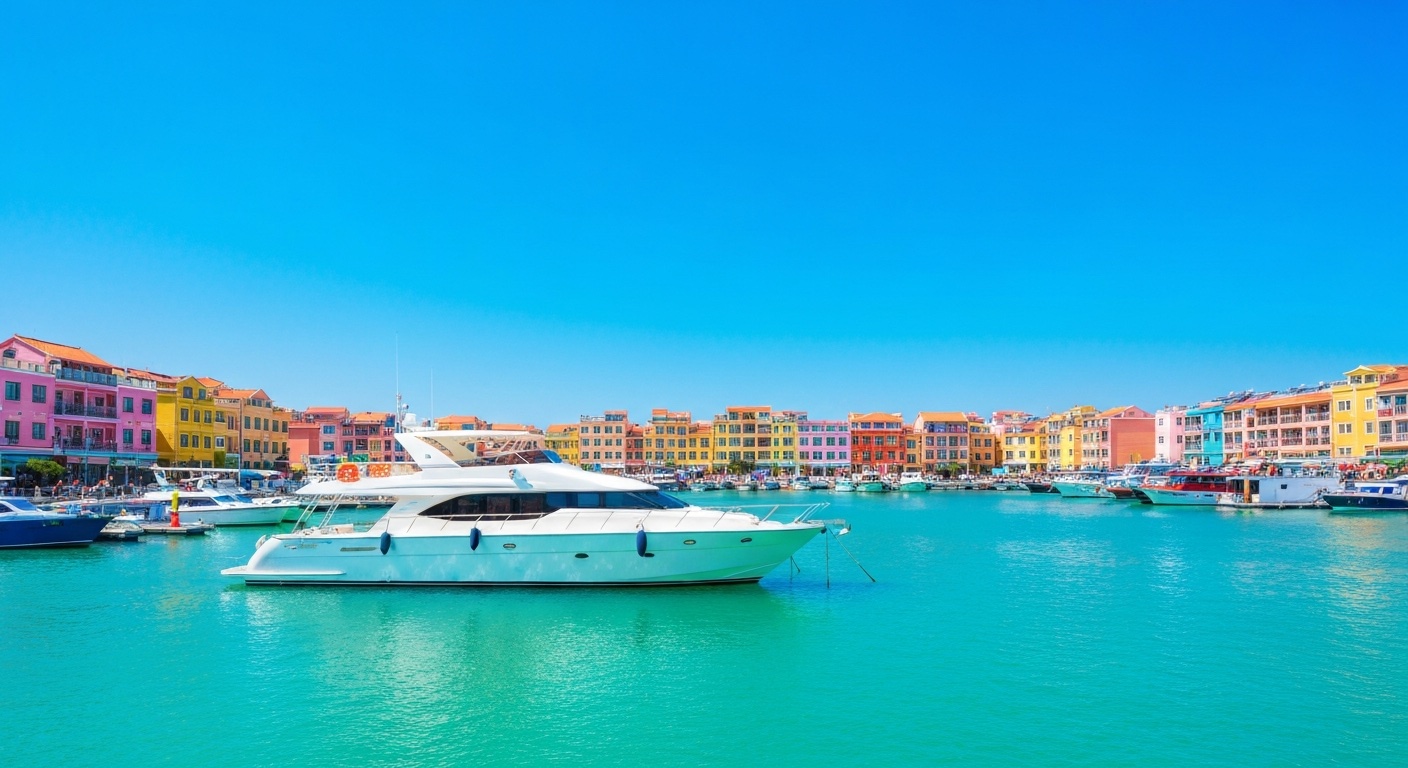
In Zhuhai, in the Pearl River Delta, at least 15 manufacturers produce recreational boats with prices between ¥100,000 and ¥300,000 ($14,000 to $41,000). These are simple boats, yes, but with a finish that has drastically improved in the last three years. Fiberglass hull, electric stern motor, navigation electronics with integrated GPS, Bluetooth sound system. For comparison, an equivalent boat from an American manufacturer like Bayliner or Sea Ray starts at $80,000 to $150,000.
The BYD Playbook Applied to Water
If you understand what BYD did with electric cars, you understand what is about to happen with yachts. The script is almost identical.
First: supply chain dominance. China already controls global production of lithium batteries, electric motors, fiberglass, and consumer electronics. Chinese yacht manufacturers do not need to import almost anything — every component comes from a factory less than 200 km from the shipyard. This cuts logistics costs that Western manufacturers simply cannot avoid.
Second: scale. While an Italian shipyard produces 200 to 500 boats per year with highly specialized (and expensive) labor, a factory in Zhuhai or Xiamen assembles 3,000 to 5,000 units using semi-automated production lines. The per-unit cost plummets.
Third: government subsidies. Beijing has identified the boating industry as one of the priority sectors within the "Made in China 2025" plan and its extensions. Manufacturers receive tax incentives, subsidized land, and access to cheap credit via state banks. It's the same recipe that turned BYD from a battery manufacturer into a global automotive powerhouse.
Fourth: a huge domestic market as a launch ramp. BYD sold millions of cars in China before even thinking about exporting. Yacht manufacturers are doing the same — refining products and processes in the domestic market before moving on to Europe, Southeast Asia, and Latin America.
Hainan: The Chinese Boating Lab
The island of Hainan, in southern China, is where all these pieces come together. Since 2020, Beijing has transformed the island into a free trade zone with ambitions to rival Hong Kong and Singapore. Among the favored sectors is nautical tourism.
Hainan offers tax exemptions for recreational boats registered on the island, which reduces the final cost by up to 30%. The provincial government has invested more than ¥8 billion in the construction of marinas, recreational ports, and coastal infrastructure in the last four years. In Sanya, the "Chinese Riviera," the number of marinas went from 3 to 11 between 2019 and 2025.
For Chinese tourists who used to fly to Thailand or the Maldives, Hainan now offers a domestic alternative with yacht trips, sport fishing, and diving — all operated by local companies with boats manufactured in China. The model is circular: tourism generates demand for boats, which generates scale for manufacturers, which reduces prices, which attracts more tourism.
Richard Liu sees Hainan as the epicenter of his project. Of the reported amount, about ¥1.2 billion goes to the construction of a shipyard and R&D center in Haikou, the island's capital. The proximity to Southeast Asia is also no coincidence — Vietnam, the Philippines, Indonesia, and Malaysia are natural target markets for low-cost Chinese yachts.
$14,500 vs. $100,000: The Math of Disruption
Let's get to the heart of the matter. How is it possible for a yacht to cost $14,500?
The short answer: it's not a yacht in the sense that a European or American imagines. A Chinese boat in this price range is between 6 and 7.5 meters in length, with an electric stern motor of 20 to 50 kW, a range of 40 to 80 km, a basic cabin with a canopy, seats for 6 to 8 people, and simple digital instrumentation. It does not have a sleeping cabin, it does not have a kitchen, it does not have air conditioning.
But here's the point: for most buyers, this is enough. The family that wants to spend a Sunday on the lake, the tourist operator who needs a fleet of 20 boats for coastal tours, the recreational fisherman who wants something more comfortable than an inflatable boat — none of them need a €200,000 Beneteau.
In the $30,000 to $45,000 range, Chinese manufacturers already offer boats from 8 to 10 meters with a closed cabin, bathroom, mini-kitchen, and a 100 kW motor. These are boats that compete directly with entry-level models from brands like Jeanneau, Bayliner, and Quicksilver — at a third of the price.
The cost difference does not come from inferior quality (although this argument still has some validity in top finishes). It comes from cheaper labor, integrated supply chain, production scale, and lower profit margins. Chinese manufacturers work with 8% to 12% margins, while European shipyards operate in the 25% to 40% range.
What the Western Industry Should Fear
The European and American boating industry is, for the most part, pretending that this is not happening. The repeated argument at trade shows like the Düsseldorf Boot Show and the Miami International Boat Show is that "yacht customers value tradition, brand, and artisanal finish."
It's the same argument Volkswagen used when BYD launched the Seal. It's the same argument Nokia used when the iPhone appeared.
The inconvenient truth is that 85% of the global recreational boat market is made up of boats under 10 meters — exactly the segment where the Chinese are most competitive. Ferretti and Azimut will not lose their €5 million superyacht customers. But Beneteau, Bavaria, and Jeanneau may see their entry-level lines evaporate in less than a decade.
The risk is amplified by electric propulsion. Combustion marine engines are dominated by brands like Mercury, Yamaha, and Volvo Penta. But electric motors are Chinese territory — the same factories that produce motors for BYD, NIO, and XPeng can easily adapt their lines for marine propulsion. As environmental regulations tighten in Europe (the Netherlands already bans combustion engines in urban canals), the Chinese advantage in electric becomes decisive.
The Risks of the Chinese Model
It would be disingenuous to paint a picture of nothing but opportunities. There are real challenges.
First, the issue of certification. To sell in Europe, boats need CE marking. For the US, they need to meet USCG (Coast Guard) and ABYC standards. The certification process is expensive and lengthy, and many Chinese manufacturers have not yet completed it for their most recent models.
Second, the technical support network. Buying a cheap boat loses its appeal if there's no one to fix the motor or replace parts in Florianópolis, Marseille, or San Diego. Building this network takes years and requires investment that many Chinese manufacturers have not yet made.
Third, brand perception. "Made in China" still carries a stigma in the luxury segment. BYD took almost a decade to be taken seriously in Europe. Chinese yacht manufacturers will face similar resistance.
But none of these obstacles are permanent. BYD overcame all of them. Huawei overcame all of them. DJI dominated the drone market despite each of these arguments. The pattern repeats with almost mechanical precision.
What This Means for Brazil
Brazil has a 7,400 km coastline, thousands of lakes and reservoirs, and a middle class that loves water sports but cannot afford them. A basic recreational boat in Brazil costs R$200,000 to R$500,000 — partly due to import taxes of up to 35% on boats.
If Chinese manufacturers can establish local assemblers or import agreements with reduced tariffs (as they have done in the automotive sector), the Brazilian boating market could explode. An electric boat for R$80,000 completely changes the equation for tourism operators in the Northeast, recreational fishermen in the South, and families in the interior of São Paulo.
It's too early to know if this will happen in 2026 or 2030. But the direction is clear.
The Wave Has Already Formed
Richard Liu is not betting on yachts because he thinks they are beautiful. He is betting because he sees the same fundamentals that made BYD worth $100 billion: integrated supply chain, expanding domestic market, structural cost advantage, and a government willing to subsidize the move.
The global boating industry is about to discover what the automotive industry, the solar panel industry, the drone industry, and the battery industry have already learned: when China decides to compete in a sector, prices fall, scale rises, and those who do not adapt are left behind.
To follow how China is transforming global markets — from electric cars to yachts, from semiconductors to clean energy — subscribe to the newsletter of chinato.watch. No filter, no jargon, straight to the point.