From Battery Factory to the World's Largest Electric Vehicle Manufacturer
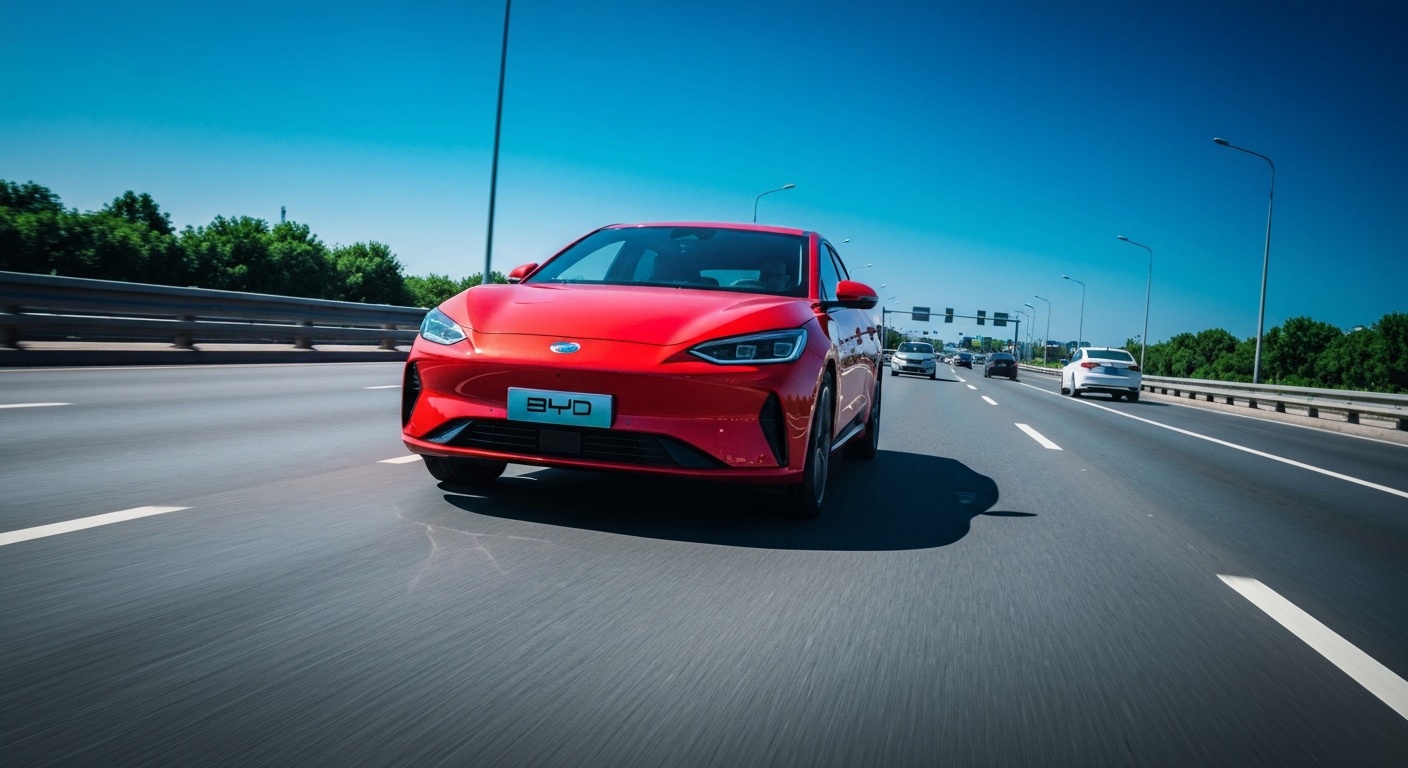
In 2025, BYD produced 4,602,436 vehicles — nearly three times more than Tesla's 1.66 million in the same period (Wikipedia/BYD Auto; Wikipedia/Tesla). The number is not a typo. The Chinese company, which was a mobile phone battery manufacturer until two decades ago, surpassed Tesla and became the world's largest electric vehicle manufacturer.
For those who follow the global automotive market, this surpassing did not happen overnight. It was a three-decade climb, built on a strategy of vertical integration, technological dominance in batteries, and a scaling capacity that few competitors can replicate. Understanding BYD's trajectory is understanding how China rewrote the rules of the global automotive industry.
Wang Chuanfu: The Chemist Who Built an Empire
The story of BYD begins with Wang Chuanfu, born in 1966 into a poor farming family in Anhui Province, China. Orphaned and raised by his older brother, Wang studied metallurgy at Central South University and completed his master's degree at the Beijing Non-Ferrous Metal General Research Institute in 1990 (Wikipedia/Wang Chuanfu).
In 1995, at the age of 29, Wang founded BYD in Shenzhen with a loan of CN¥250,000 from his cousin Lu Xiangyang. The idea was simple: to manufacture rechargeable nickel-cadmium batteries at costs much lower than Japanese competitors. While Japanese factories heavily invested in automation, Wang opted for a labor-intensive model, reducing unit costs by five to six times (Wikipedia/BYD Company).
The strategy worked. By 2002, BYD was already the world's largest manufacturer of nickel-cadmium batteries, with 65% of global production, having clients such as Motorola, Philips, and Panasonic. Charlie Munger, vice-president of Berkshire Hathaway, called Wang a "genius" and a "workaholic". In September 2008, Berkshire Hathaway invested US$230 million in BYD for a 9.89% stake — an investment that multiplied several times before Berkshire sold its entire stake by September 2025.
2003: The Leap into the Automotive Sector
In January 2003, Wang did what many considered madness: he bought Xi'an Qinchuan Automobile, a small declining state-owned manufacturer, for HK$269 million. BYD shareholders were furious — the plan had not been disclosed in the company's prospectus (Wikipedia/BYD Auto).
But Wang had a clear vision: to use BYD's expertise in batteries to develop electric vehicles. Qinchuan, which had been manufacturing cars since 1987, offered something hard to come by in China at the time — a motor vehicle production license.
The first car developed by BYD, codenamed 316, was so poorly received by dealers that Wang personally destroyed the prototype. The loss: CN¥100 million in wasted R&D. The company regrouped and launched the BYD F3 in April 2005, a sedan priced at CN¥73,000 (about US$10,000) that resembled the Toyota Corolla — but cost much less. Over 63,000 units were sold in the first year.
The Electric Pivot: From F3DM to Blade Battery
While selling internal combustion vehicles, BYD never lost sight of its original goal. The company had already been researching electric vehicles since 1997 — even before entering the automotive sector. In 2006, it founded the Electric Vehicle Research Institute. In 2008, it launched the F3DM, the world's first mass-produced plug-in hybrid vehicle. In 2009, came the e6, its first pure electric vehicle, with a declared range of 400 km.
But the years between 2009 and 2020 were stagnant. Annual sales remained between 400,000 and 500,000 vehicles, while the company heavily relied on government subsidies. In 2016, BYD received approximately US$1 billion in subsidies — more than its net profit that year. Between 2015 and 2020, the Rhodium Group estimates that the company received about US$4.3 billion in state support.
The technological turning point came in 2020, with the launch of the Blade Battery — a lithium iron phosphate (LFP) battery with proprietary design. The blade-shaped cells, 96 cm in length, increase space utilization in the pack by more than 50% compared to conventional LFP batteries. In the nail penetration test — one of the most stringent for battery safety — the Blade Battery did not emit smoke or fire, reaching only a surface temperature of 30 to 60°C (Wikipedia/BYD Blade Battery).
The Blade Battery is not just a product — it is the symbol of BYD's vertical integration model. The company manufactures internally batteries, electric motors, electronic controllers, and most of the components of its vehicles. Its subsidiary FinDreams Battery is the world's second-largest manufacturer of electric vehicle batteries, behind only CATL, with a 17% global market share in 2024.
2020-2025: The Explosion of Sales
Starting from 2020, BYD experienced one of the most impressive ascents in automotive history. Sales jumped from 427,302 vehicles in 2020 to 4,272,145 in 2024 — a tenfold increase in just four years (Wikipedia/BYD Auto).
Several factors converged: the popularization of new energy vehicles (NEV) in China, which went from 5.8% of sales in 2020 to 27.5% in 2022; the launch of competitive models such as the BYD Han (with Blade Battery), the Dolphin, and the Seagull; and an aggressive pricing strategy that triggered a price war in the Chinese market.
In March 2022, BYD made a radical decision: it completely ended the production of internal combustion vehicles. A bet that the market validated. In 2023, it surpassed Volkswagen as the best-selling brand in China — a title that the German manufacturer had maintained since the liberalization of the Chinese automotive market.
In 2024, BYD Company's revenue reached ¥777.1 billion (US$107.97 billion), with a net profit of ¥40.25 billion (US$5.59 billion). The company employed 968,900 people in December 2024 — the largest private sector employer in China since 2022. For comparison, Tesla registered revenue of US$94.83 billion in 2025, with a net profit of US$3.79 billion and 134,785 employees.
In 2025, BYD produced 4,602,436 vehicles, consolidating its definitive surpassing of Tesla and its 1.66 million. The company also surpassed Ford, becoming the sixth-largest manufacturer in the world in total sales. About 77% of BYD's 2025 sales came from the Chinese market.
BYD vs Tesla: Opposite Business Models
The comparison between BYD and Tesla goes beyond sales numbers. They are two fundamentally different business models that reflect distinct visions of the future of electric mobility.
Tesla, founded in 2003 in Silicon Valley, built its brand around cutting-edge technology, software, and the media figure of Elon Musk. Its focus is on premium vehicles, autonomous driving, and its own network of chargers (Superchargers). The company operates with higher margins per vehicle but a relatively lower volume.
BYD followed the opposite path: massive scale, affordable prices, and total supply chain control. By manufacturing its own batteries, semiconductors, and motors, BYD can control costs in a way that few competitors can match. The BYD Seagull, launched in April 2023, costs less than CN¥90,000 (about US$12,000) and became one of China's best-selling electric vehicles in just a few months — the kind of popular vehicle that Tesla never produced.
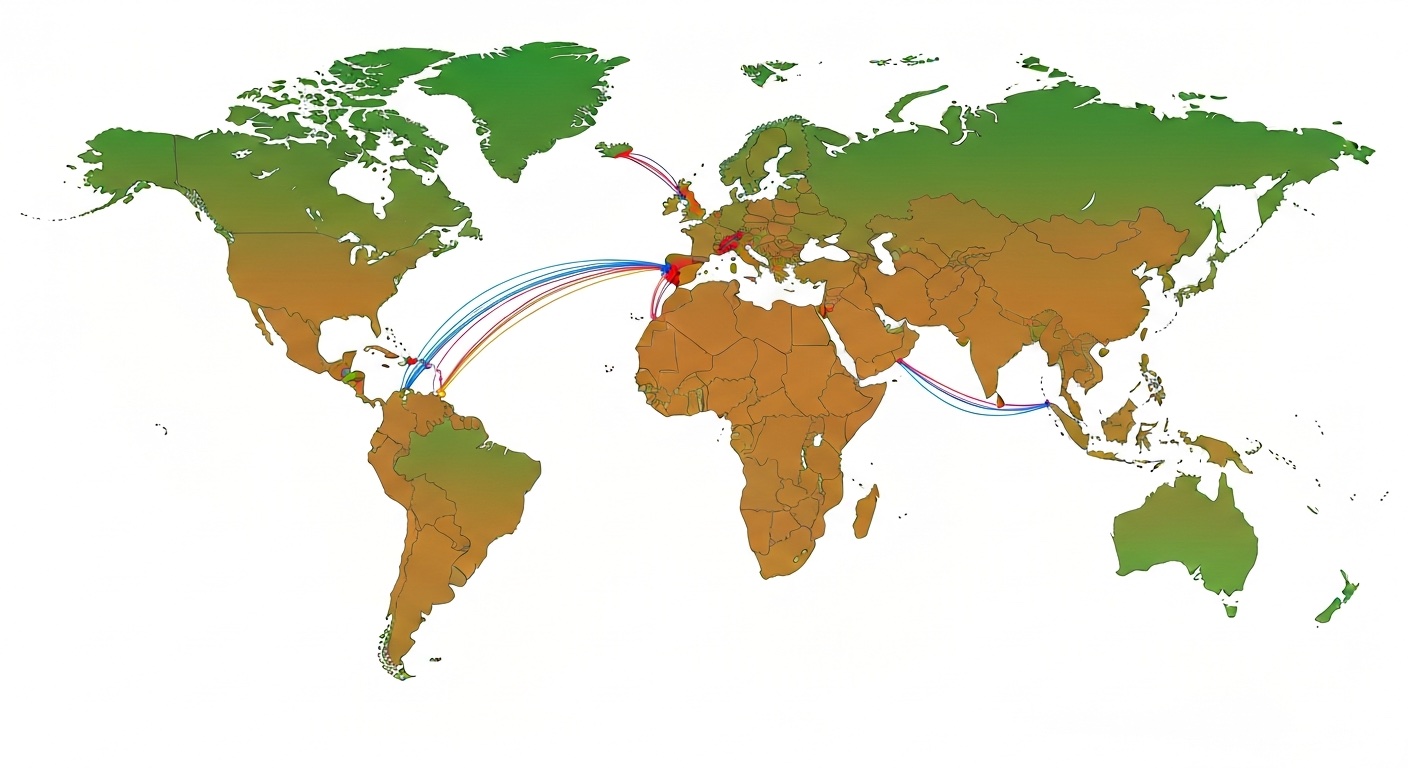
While Tesla remains strong in the US and Europe, BYD aggressively expands into emerging markets: Southeast Asia, Latin America, Oceania, and the Middle East. Global expansion is a matter of survival in the face of an increasingly competitive domestic market.
The Brazilian Angle: Camaçari and the Future of BYD in Latin America
Brazil occupies a strategic position in BYD's global expansion. In 2024, the country was the second-largest market for the brand outside of China, with 76,713 vehicles sold — ahead of Mexico (40,000), Thailand (26,981), and Australia (20,458) (Wikipedia/BYD Auto).
BYD's presence in Brazil is not new. The company already supplied electric buses to Brazilian cities before entering the passenger vehicle market. But the big milestone is the factory in Camaçari, in Bahia — installed in the former Ford complex, which ended operations in Brazil in 2021.
The investment announced by BYD for the Camaçari complex is R$3 billion, with the expectation of generating thousands of direct and indirect jobs in the region. The factory represents the first large-scale Chinese electric vehicle assembly operation in Latin America and signals a structural change in the Brazilian automotive market, historically dominated by European, American, and Japanese manufacturers.
For the Brazilian consumer, local production may mean more competitive prices — reducing import and logistics costs — and access to models that were not economically viable for the national market until now. For the Bahian and Northeastern economy, the factory represents the recovery of a productive chain that seemed lost with Ford's departure.
BYD's bet on Brazil reflects a broader strategy: while tariff barriers in Europe and the US make it difficult for Chinese vehicles to enter (the European Union imposed additional tariffs on Chinese EVs, and the US raised tariffs to 100%), markets like Brazil offer more favorable conditions and a growing demand for electric and hybrid vehicles.
Vertical Integration: BYD's Secret Weapon
If there is one concept that defines BYD, it is vertical integration. The company not only assembles cars — it manufactures batteries (FinDreams Battery), semiconductors (BYD Semiconductor), electric motors, electronic controllers, and even mobile phone components (BYD Electronics). There are over 13,000 patents registered between 2003 and 2023.
This model allows BYD to react quickly to market changes, control quality at every step of production, and, most importantly, keep prices low. While traditional manufacturers depend on dozens of suppliers for critical components — and were exposed during the 2021 global chip crisis — BYD navigated the period with relative calm.
Wang Chuanfu's model echoes what Henry Ford did a century ago with the assembly line, but applied to the electric era: control the entire chain, from the mine to the dealership. The difference is that BYD operates on a scale and speed that Ford never imagined — almost 970,000 employees and factories on multiple continents.
The Challenges Ahead
BYD's meteoric rise is not without turbulence. In July 2025, the company registered its first monthly delivery decline of the year, with 341,030 vehicles compared to 377,628 in June. In the second quarter of 2025, net profit fell 29.9% compared to the previous year, to ¥6.4 billion — the first decline in over three years.
In September 2025, BYD internally reduced its annual sales target by up to 16%, from 5.5 million to 4.6 million units. The price war in the Chinese market, which BYD itself helped intensify, is compressing margins across the industry. Chinese authorities even asked the company to moderate price cuts.
Internationally, protectionist barriers represent a significant obstacle. The company also faces scrutiny over labor practices in its factories and environmental issues — criticisms that it will need to address to consolidate its brand in more demanding markets.
Nevertheless, the numbers speak for themselves. A company that in 1995 manufactured mobile phone batteries with 20 employees now produces more electric vehicles than any other manufacturer on the planet. Wang Chuanfu set a goal in 2008 to make BYD the world's largest manufacturer by 2025. In electric vehicles, he kept his promise.
What BYD's Ascent Means for the World
The surpassing of Tesla by BYD is more than a dispute between two companies. It is the symbol of a geopolitical transformation in the automotive industry. China — which 20 years ago imported technology from Western manufacturers — now exports electric vehicles to more than 90 countries and builds factories from Bahia to Thailand.
For Brazil, this transformation brings opportunities and complex issues. The Camaçari factory could be the beginning of an electric vehicle hub in the Northeast, but it also raises questions about the competitiveness of already established manufacturers in the country and about dependency on a supply chain that starts in China.
The BYD vs Tesla rivalry will continue to be one of the most relevant themes of the global economy in the coming years. Two models, two philosophies, two countries — and the future of mobility at stake.
This type of analysis is a highlight in China to Watch — where we translate China's movements for those who want to understand the real impact on the economy, technology, and global geopolitics. Follow our publications to not miss the next analyses.