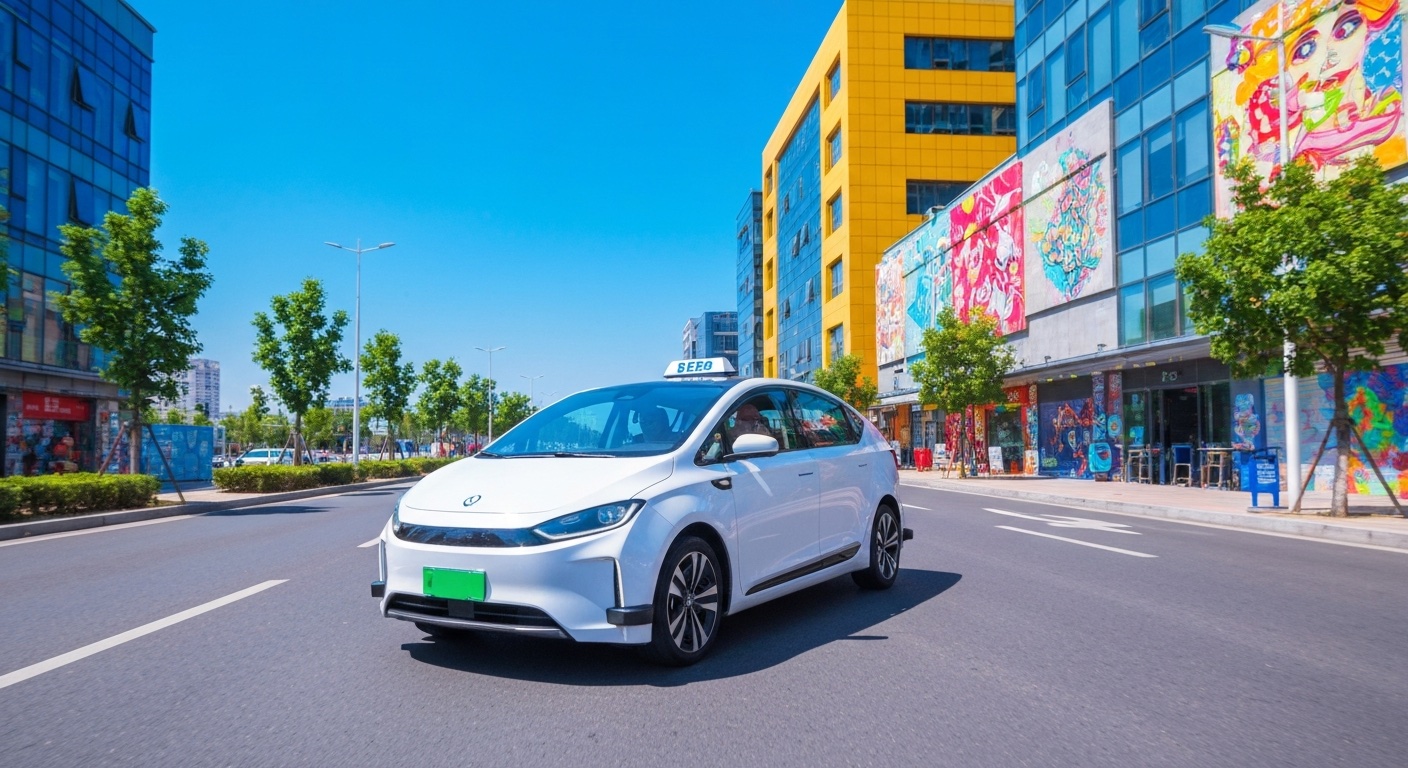
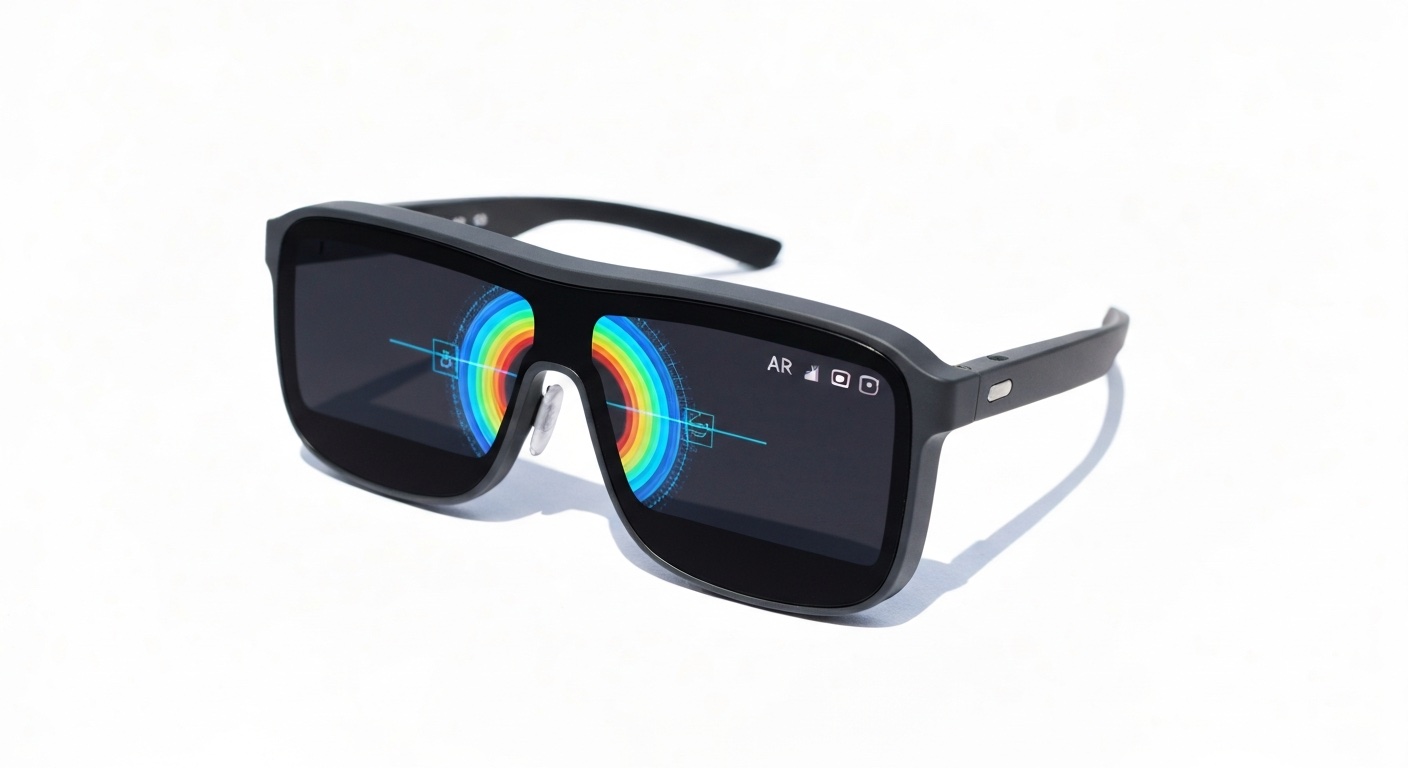
If you've passed by Huaqiangbei — the world's largest electronics market, in Shenzhen — in the last few months, you must have noticed a change. The showcases that previously displayed drones and Bluetooth headphones are now taken over by smart glasses. And it's not just for show: retailers report a staggering 80% increase in sales of these devices since mid-2025. China has decided that the next technological battleground is on its face.
It's not a passing fad. Baidu, Xiaomi, XREAL, and Rokid are heavily investing, each with different strategies, aggressive pricing, and — most importantly — integration with their own models of artificial intelligence. While Meta bets on the Western market with the Ray-Ban Meta, Chinese companies are building a parallel ecosystem that could redefine what we expect from a pair of glasses.
What are AI smart glasses (and why now)
Smart glasses have existed since the 2010s — Google Glass is the most famous (and most commercially unsuccessful) example. The basic idea has always been the same: to put a wearable computer on your face, with a camera, microphone, Bluetooth connection, and in some cases, an integrated screen. What has changed now is generative artificial intelligence.
Cloud-based language models have transformed these glasses from curious gadgets into real personal assistants. You look at a menu in Japanese, and the glasses translate it in real time. Point at a historical building, and it tells you its history. Walk into a meeting, and it transcribes everything. This is not science fiction — it's what already works in the latest models.
China, which already dominates the production chain of miniaturized optical and electronic components, was positioned to lead this wave. And that's exactly what's happening.
Huaqiangbei: the market's thermometer
Huaqiangbei acts as an advance thermometer for tech trends in China. When the retailers there change their showcases, something big is happening. And what's happening is a boom in AI glasses.
According to reports from the South China Morning Post and 36Kr, smart glasses sales in Huaqiangbei grew by more than 80% between the second half of 2025 and the beginning of 2026. The best-selling models cost between 999 and 2,999 yuan (approximately R$ 750 to R$ 2,250), a price range that makes them accessible to the Chinese middle class — and absurdly competitive against the Ray-Ban Meta, which starts at US$ 299 (about R$ 1,800) without any of the advanced AI features that Chinese models offer in the equivalent range.
It's not just Shenzhen. In Hangzhou, Beijing, and Chengdu, experience stores (the famous "体验店") dedicated exclusively to smart glasses are opening in shopping malls. The format is reminiscent of what DJI did with drones ten years ago: beautiful showrooms, attendants who put the product on your face and let you play with it for half an hour. It works.
Baidu: the search giant wants to live on your face
Baidu launched its integrated smart glasses with Ernie Bot (the company's generative AI model) at the end of 2025. The product is called Baidu Glasses and, instead of trying to be a full augmented reality glasses, it focuses on three things: AI voice assistant, real-time translation, and photo/video capture.
The design is discreet — it looks like regular prescription glasses, without the holographic screens that scared people with Google Glass. The frame is made of acetate, weighs about 45 grams, and has a battery life of 4 to 5 hours of active use. The suggested price is around 1,999 yuan (≈ R$ 1,500).
Baidu's differential is the deep integration with the company's service ecosystem. Ernie Bot understands Mandarin with impressive accuracy, including regional dialects. For foreign tourists in China (or Chinese traveling), simultaneous translation in more than 30 languages is the killer feature. You speak in Portuguese, and the person in front of you hears Mandarin through the glasses' speaker. It seems magical. It works surprisingly well.
Xiaomi: low price, brutal distribution
Xiaomi did what Xiaomi always does: took an emerging category and put a price that makes everyone look twice. The Xiaomi Smart Glasses, which hit the market at the beginning of 2026, cost from 999 yuan (≈ R$ 750). For the price of a premium headphone, you get glasses with a 12MP camera, noise-canceling microphone, directional speaker, and integration with Xiaomi's AI assistant, Xiao AI.
The most basic model doesn't have a screen — it works as an "audio glasses" with AI, similar to what Ray-Ban Meta does. The Pro version, for 1,999 yuan, includes a monocular micro-display that projects notifications and contextual information in the corner of the field of vision.
Xiaomi's big advantage is distribution. The company has more than 12,000 physical stores in China. If you go into a Mi Store to buy a charger, you leave testing AI glasses. This kind of casual access to the product is something that no Western competitor can replicate on the same scale.
XREAL: the bet on real augmented reality
XREAL (formerly Nreal) is the most internationally known Chinese company in the smart glasses segment, and for good reason. Its Air line glasses offer a legitimate augmented reality experience, with birefringent OLED screens that project images equivalent to a 130-inch TV three meters away.
The latest model, the XREAL One, costs around 2,999 yuan (≈ R$ 2,250) and works as a portable screen that connects to a smartphone or computer via USB-C. It's not exactly a "smart" glasses in the sense of having onboard AI — the processing comes from the connected device. But XREAL launched in January 2026 the XREAL One Pro, which includes a dedicated chip and integration with AI models for object recognition and real-time visual translation.
XREAL's target audience is different from the others: professionals who want to replace monitors, gamers who want a portable immersive screen, and AR developers. The company has already sold more than 1 million units worldwide and is aggressively expanding in Europe and South America.
Rokid: industrial AR that turned to consumer
Rokid started in the enterprise segment — its glasses were used in factories, warehouses, and industrial maintenance. But in 2025, the company turned to the end consumer with the Rokid Max 2 and the Rokid AR Lite.
The Rokid Max 2 is an AR glasses with high-resolution micro-OLED screens, aimed at entertainment and productivity. The AR Lite is a complete package: glasses + portable processing unit with Qualcomm chip, which runs Android and allows using apps natively, without depending on a cell phone.
The price of the AR Lite is around 3,499 yuan (≈ R$ 2,600), which makes it the most expensive option among the Chinese brands mentioned here — but still significantly cheaper than the Apple Vision Pro (US$ 3,499) or the Magic Leap 2 (US$ 3,299). And unlike those huge devices that look like helmets, Rokid looks like a sports sunglasses.
How the Chinese compare to Ray-Ban Meta
The Ray-Ban Meta, made in partnership between Meta and EssilorLuxottica, is the best-selling smart glasses in the West. It costs from US$ 299, has a beautiful design (it's a legitimate Ray-Ban Wayfarer), 12MP camera, integrated speakers, and access to Meta AI.
Strengths of Ray-Ban Meta: iconic design, build quality, integrated Instagram/Facebook ecosystem. Weak points: no AR screen, limited AI compared to Chinese models with Ernie Bot or equivalents, and less competitive price when compared to what Xiaomi and Baidu offer for similar or lower values.
Chinese glasses win in AI features (especially translation and contextual assistant), price, and variety of options. Ray-Ban Meta wins in design, brand, and integration with Western social networks. It's a division that reflects the Internet itself: two parallel ecosystems, each optimized for their market.
For those who live in China or travel frequently here, Chinese models make much more sense. The AI services are optimized for the local environment — WeChat, Baidu Maps, Alipay — while Ray-Ban Meta relies on Google and Meta, which have limited or blocked access in the country.
The price war and the cascade effect
What makes the Chinese smart glasses market particularly interesting is the speed at which prices are falling. In 2024, glasses with basic AI features cost over 3,000 yuan. In 2026, Xiaomi delivers something functional for 999 yuan. This price compression follows the classic pattern of the Chinese tech industry: fierce competition between dozens of manufacturers in Shenzhen who share the same supply chain, resulting in increasingly smaller margins and more accessible products.
This has a global cascade effect. When Xiaomi sells AI glasses for R$ 750, it's hard for any Western competitor to justify three or four times higher prices for equivalent features. Competitive pressure will force Meta, Google (which is developing new Gemini glasses), and even Apple to rethink their pricing strategies.
Privacy: the elephant in the room
You can't talk about glasses with a camera without talking about privacy. And here the situation is complicated. In China, social acceptance of cameras is much greater than in the West — surveillance cameras are ubiquitous, and facial recognition is used for everything, from payments to entry into condominiums. Glasses with a camera don't cause the same discomfort they caused when Google Glass was launched in the US in 2013.
But for export markets, especially Europe (with GDPR) and Brazil (with LGPD), Chinese manufacturers will need to adapt their products. XREAL has already implemented an LED indicator that lights up when the camera is recording — a simple solution that may not be enough for stricter regulators.
This is a point worth following closely in the coming months.
What to expect for 2026 and beyond
The consensus among industry analysts is that 2026 will be the year when smart glasses move from niche to mainstream in China. IDC projections point to sales of over 10 million units in the country by the end of the year — a 150% jump from 2025.
The most likely next steps:
Integration with payments: Alipay and WeChat Pay in glasses. Look at the QR code and pay with a blink (literally).
Health: Vital signs monitoring through sensors in the frame. Huawei has already patented a system that measures blood pressure by contact of the frame with the temple.
Fashion: Partnerships with Chinese and international fashion brands. Smart glasses that look too smart don't sell. What looks like a Gentle Monster with superpowers, sells.
Aggressive exportation: XREAL and Rokid are already in Western markets. Xiaomi and Baidu should follow in 2026-2027, probably starting with Southeast Asia and Latin America.
Why this matters for those who follow China
Smart glasses are just another chapter in the story of how China turns expensive Western technology into mass consumer products. It happened with smartphones (Xiaomi and its 999 yuan phones in 2013), with drones (DJI), with electric cars (BYD), and now it's happening with AI wearables.
The pattern is always the same: brutal internal competition → prices plummet → quality rises → product conquers the domestic market → exports begin. We're at stage 4 of this sequence with smart glasses.
If you want to understand where consumer technology is going — not in five years, but now — you need to be looking at China. And that's exactly what we do at chinato.watch: translate what happens in the world's largest technology market for those who don't speak Mandarin but don't want to be left behind.