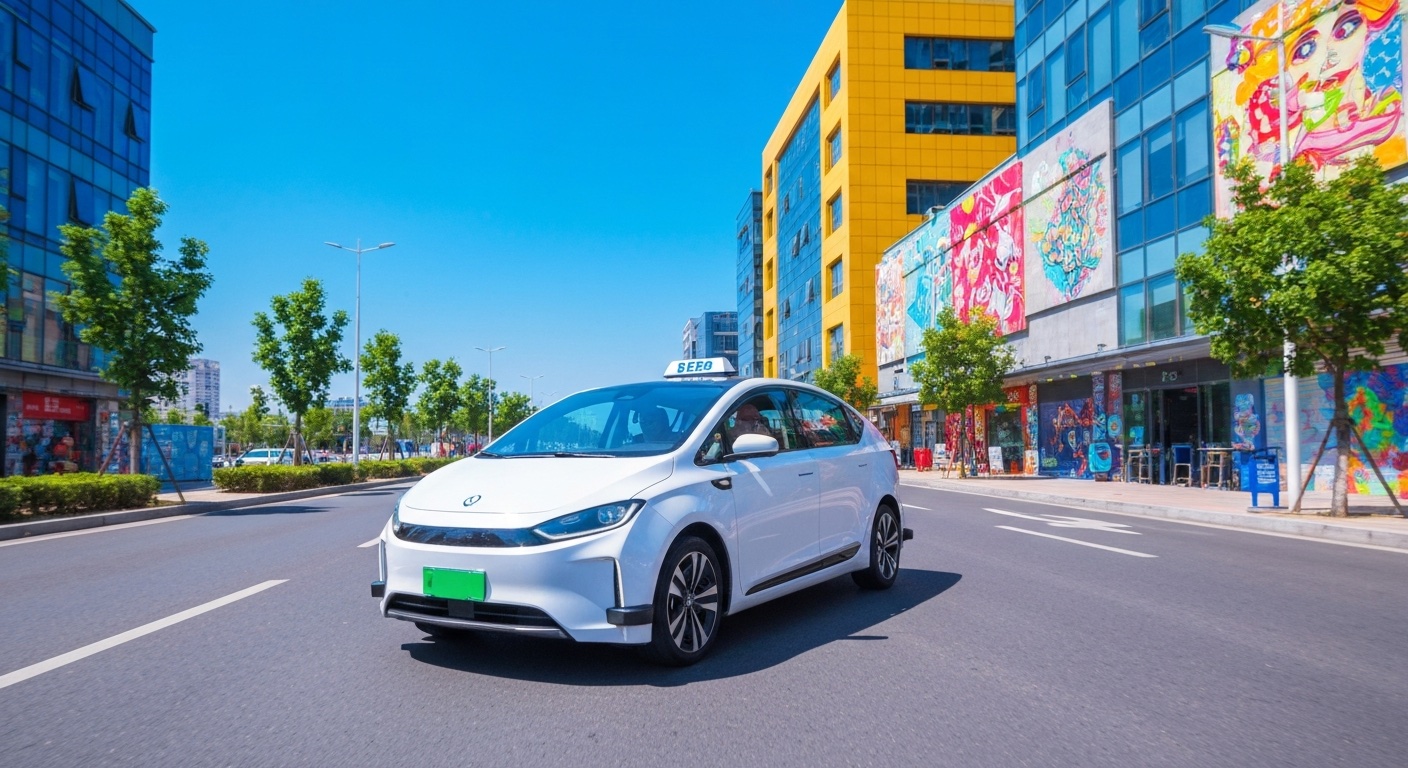
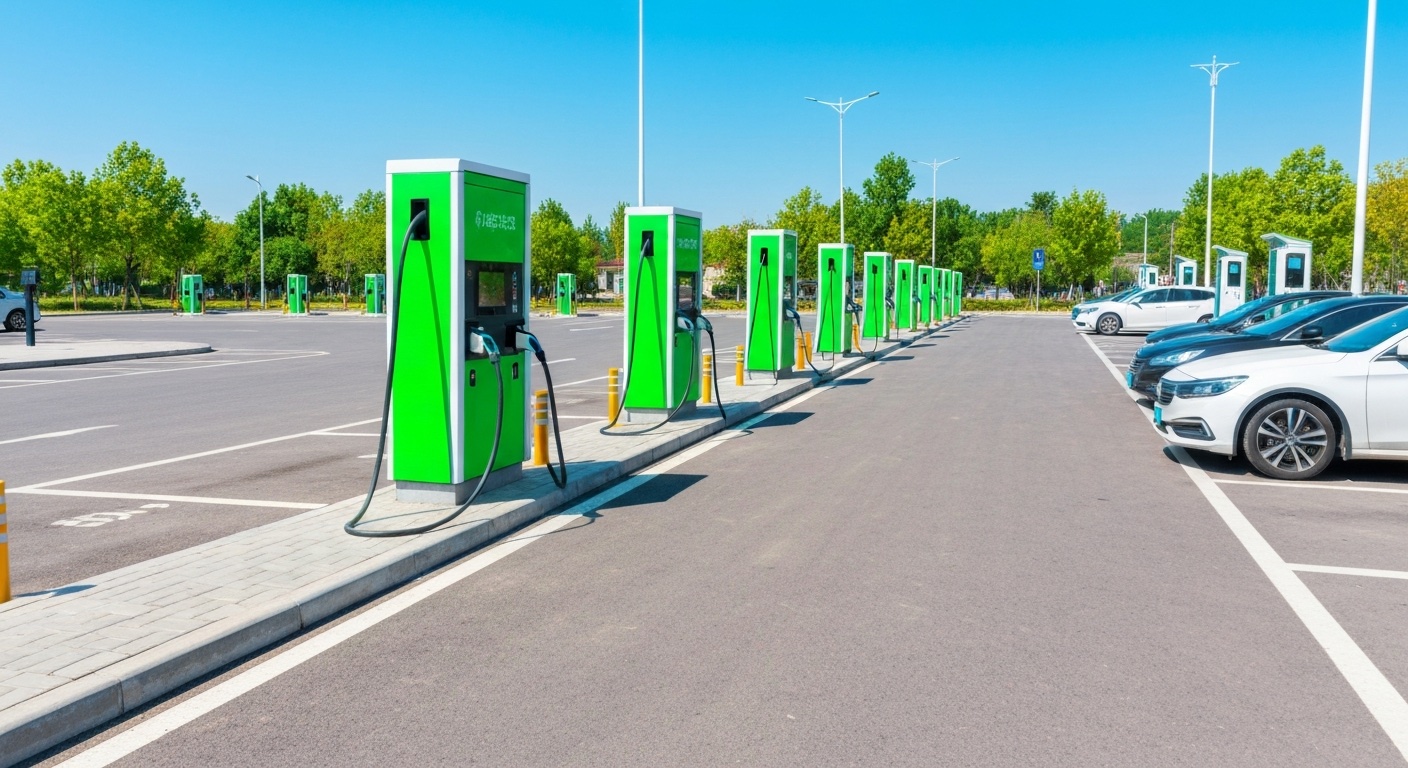
While much of the world is still discussing electrification targets for 2030, China is already operating the largest charging network for electric vehicles on the planet — and the numbers are hard to ignore. There are 53,300 charging stations installed along highways, covering almost all expressway routes in the country. And this number grows every week.
But the raw data of stations does not tell the whole story. To understand the true scale of this infrastructure, one must look at what happens when it is put to the test — such as during the Chunyun, the Spring Festival, when hundreds of millions of Chinese people take to the roads at the same time.
6 million charges during the Spring Festival
The Chunyun is the largest annual human migration on the planet. It is about 40 days in which workers return to their hometowns to celebrate the Lunar New Year with their families. In 2025, the volume of road trips set records — and with them, the consumption of energy for electric vehicles.
During the Spring Festival period, the highway charging network registered more than 6 million charge sessions. To put this into perspective: this is an average of 669,000 charges per day. We are not talking about urban stations near shopping malls or offices. These are chargers in service areas along highways, used by drivers who are traveling hundreds — sometimes thousands — of kilometers.
This volume is only possible because the network was planned to withstand peaks. Service areas on Chinese highways are not adapted gas stations. They are facilities built with dozens of simultaneous charging points, often with solar covers and intelligent load management systems that distribute energy according to demand.
The revolution of 800V ultra-fast charging
If the number of stations impresses, the charging speed is what really changes the game. China is in the midst of a massive transition to 800-volt electrical architectures, which allow for ultra-fast charging — we are talking about 10 to 80% battery in less than 20 minutes for many models.
Brands such as BYD, Xpeng, Li Auto, Zeekr, and Huawei (with the Luxeed and the Stelato) already sell vehicles with 800V platforms. The Xpeng G9, for example, can add 200 km of autonomy in just 5 minutes of charging. The Zeekr 001, another example, operates on an 800V architecture with chargers up to 360 kW.
This advance has not been limited to premium cars. BYD, which dominates the mass market, has already incorporated fast charging technology into more accessible models. The Seal, the Han, and even versions of the Dolphin have accelerated charging that would have been unthinkable three years ago.
Charger manufacturers have followed suit. Companies such as TELD, Star Charge, and Huawei Digital Power produce 480 kW and up to 600 kW stations that are already being installed on high-demand highways. Huawei, in particular, has bet heavily on liquid-cooled chargers that can operate at maximum power even in extreme temperatures — something critical for a country that ranges from the Siberian cold of Harbin to the tropical heat of Hainan.
NIO and battery swapping: the alternative path
Not everyone wants to wait 20 minutes (or 5, or 15). NIO has bet on a radically different approach: battery swapping. Instead of charging, you go into an automated station, a robot removes the discharged battery and installs a full one. The process takes about 3 minutes.
NIO already operates more than 2,600 battery swap stations in China, and the goal is to surpass 5,000 in the coming years. These stations are distributed both in cities and along highways — and during the Spring Festival, many operated 24 hours, with queues that flowed quickly thanks to the speed of the process.
NIO's battery swap model solves a problem that fast charging still faces: degradation. Charging a lithium battery at very high powers repeatedly accelerates the wear of the cells. With swapping, NIO can charge the batteries in its warehouses more slowly and controlled, preserving the useful life, while the driver continues their journey in minutes.
CATL, the world's largest battery manufacturer, has also entered the battery swap segment with the EVOGO brand, signaling that this technology could expand beyond the NIO ecosystem.
The infrastructure behind the infrastructure
Building 53,000 highway charging stations is not just about installing posts with sockets. There is an entire chain that needs to work: energy generation, transmission, local transformers, management software, maintenance, and integrated payment.
In China, payment is made via apps such as WeChat or Alipay — you scan a QR code at the station, connect the cable and that's it. There is no need for an RFID card, there is no need to download 15 different apps (a real problem in Europe and the US). The experience is standardized and works with any operator.
The State Grid, the Chinese state-owned electric power company, plays a central role. In addition to operating its own charging network, it ensures that high-voltage electrical infrastructure reaches service areas on highways with sufficient capacity to power dozens of simultaneous chargers. In many places, this has meant building dedicated electrical substations exclusively for charging stations.
Another detail that goes unnoticed: energy storage. Many highway charging stations already have stationary batteries (energy storage systems) that accumulate energy during low-demand periods and release them during peaks. This reduces the pressure on the electrical grid and allows more simultaneous chargers to operate without dropping the voltage.
And where is Brazil in all this?
The comparison, to be honest, is uncomfortable. Brazil has a rapidly growing fleet of electric and plug-in hybrid vehicles — more than 160,000 units sold in 2024 — but the charging infrastructure is far from keeping up.
According to data from ABVE (Brazilian Electric Vehicle Association), Brazil had about 12,000 public charging points at the end of 2024. It seems reasonable until you realize that most operate on alternating current (AC) with powers of 7 to 22 kW — that is, a full charge can take 4 to 8 hours. Fast DC chargers (50 kW or more) are still a minority, and ultra-fast chargers above 150 kW are very rare outside specific concessioned highways.
The coverage on highways is the most critical point. While China has 53,300 stations on highways, Brazil has charging corridors on some São Paulo highways (Anchieta-Imigrantes, Bandeirantes, Castelo Branco) and sections of BR-101 and BR-116, but with irregular spacing and limited power. Taking a trip from São Paulo to Florianópolis in an EV still requires careful planning and a dose of courage.
The problem is not lack of demand. The BYD Dolphin and the BYD Yuan Plus are among the best-selling cars in various categories, and the GWM Haval, the Volvo EX30, and JAC models are also gaining space. The bottleneck is infrastructure — and specifically, fast charging infrastructure on highways.
There are positive movements. Raízen has inaugurated charging stations at Shell gas stations, Enel X operates a growing network, and Zletric and Tupinambá are expanding their points. The federal government's Rota 2030 program includes incentives for charging infrastructure. But the pace is slow compared to what China did in just five years.
Why was China able to move so fast?
Three factors explain the Chinese speed. First, central coordination. The Chinese government treated charging infrastructure as a strategic industrial policy, not as a market initiative. The goals were set at the State Council level, and state energy companies were mobilized to execute.
Second, market scale. China sold more than 10 million new energy vehicles (NEVs) in 2024. When you have this user base, the economic equation for charging stations closes faster — each charger is used more frequently, and the return comes sooner.
Third, vertical integration. Companies like BYD manufacture the car, the battery, the energy management chip, and in some cases, the charger itself. Huawei makes the charging system, the car software, and the telecommunications infrastructure that connects everything. This integration allows optimizing the entire supply chain from end to end.
What's coming next
The next frontier is megawatt charging for commercial vehicles. Electric trucks and buses need much higher powers — we are talking about 1 MW or more — and China is already testing these stations on high-demand logistics routes.
Another trend is vehicle-to-grid (V2G) integration, in which electric cars not only consume energy but also return it to the grid during peak hours. With millions of batteries on wheels connected to the network, the potential for stabilizing the electrical system is enormous.
For Brazil, the lesson is clear: without a robust charging infrastructure, the electrification of transportation will hit a ceiling. Cars are becoming more accessible — the BYD Dolphin Mini starts at less than R$ 120,000. But if there is no place to charge quickly on the road, adoption will be limited to those who only use the car in the city.
The window of opportunity exists. Brazil has a predominantly clean electricity matrix, has Chinese assemblers investing heavily in the country, and has growing demand. What is missing is treating charging infrastructure with the same urgency that China treated five years ago.
To follow the evolution of technology, infrastructure, and the Chinese automotive market — and what it means for Brazil — follow chinato.watch. Every week, unfiltered analysis on what China is building and how it impacts the rest of the world.