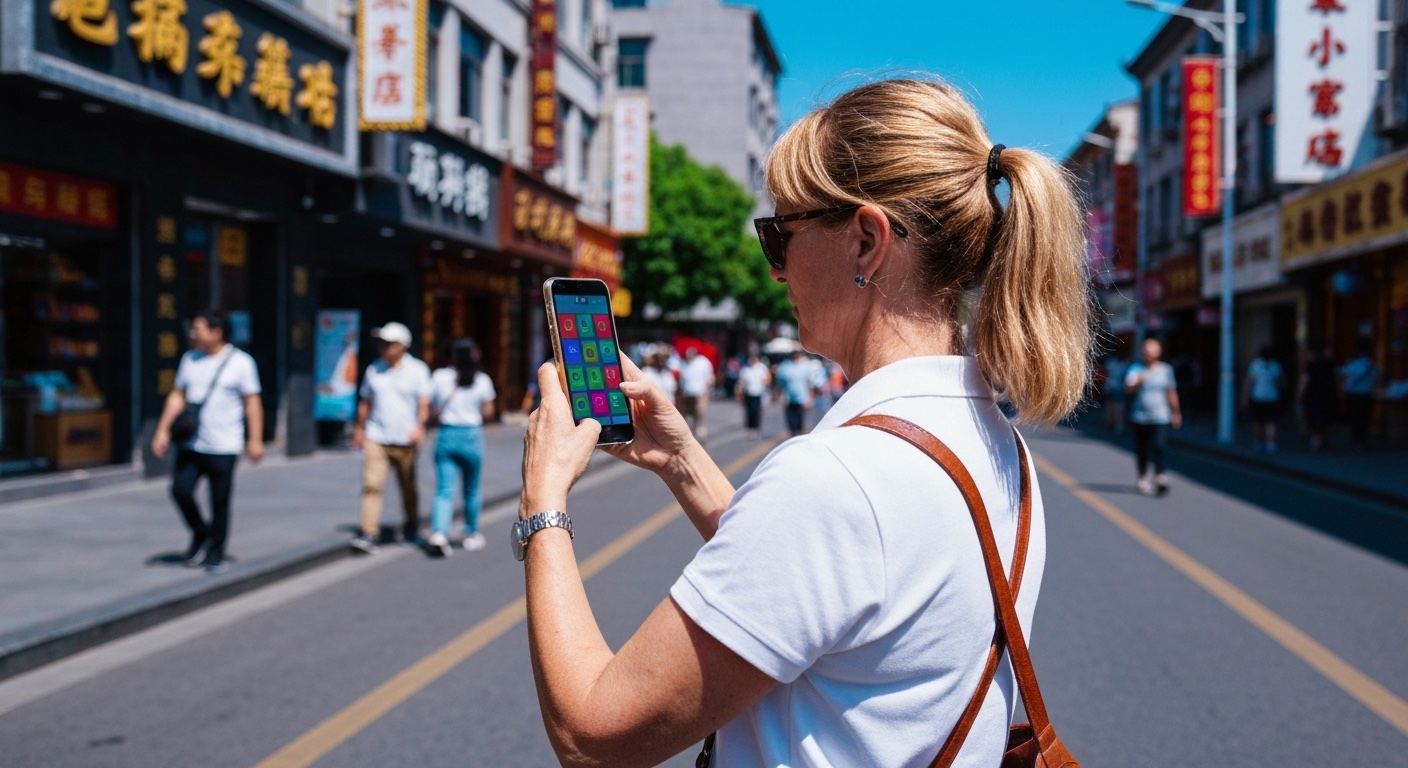
China uses in everyday life technologies that in the West are still in the testing phase or are considered science fiction. Living in Kunshan, I see daily facial recognition payments, drones delivering lemon tea in parks, cashier-less supermarkets, and buildings that literally breathe. These are not exceptions in luxury shopping malls. They are on neighborhood corners, popular clinics, and bullet trains. The difference is scale and integration. While in Brazil we discuss QR code, here 刷脸支付 (shuā liǎn zhī fù) is already the standard method even in peripheral bakeries.
Facial recognition payment in cashier-less supermarkets
In Xi'an, I entered a store where my face was the only card needed. The 刷脸支付 (shuā liǎn zhī fù) system scans your face in less than two seconds. According to 新浪财经 (Sina Finance), this technology was already operating in the city's supermarkets in 2018, seven years ago. The comma network, cited by 凤凰网财经 (Ifeng Finance), uses facial biometrics to create a completely frictionless experience.
The process is smooth. You scan your face at the entrance to open the glass door, pick up products from the shelves, and leave. Weight sensors and computer vision identify what you took. When you cross the exit, the billing happens automatically on the linked cell phone. There are no lines, cash registers, or attendants. 澎湃新闻 (The Paper) reported that even foreign tourists adapt in seconds. In Brazil, this seems far away. For me, it's routine when I forget to buy milk at ten at night.
The acceptance is total because the system is integrated into the superapps that every Chinese person uses. You don't need to download a specific store app. It works with Alipay or WeChat, which already have their facial data registered. Trust in digital infrastructure allows even the elderly to adopt without fear.
Delivery drones in the last mile in urban areas
In Huangxing Park in Shanghai, I witnessed a scene that seemed like a movie. A Brazilian journalist ordered a lemon tea and the drink arrived from the sky, delivered by a drone that gently landed on the grass. The scene was recorded by 新浪财经 (Sina Finance) and illustrates the 低空经济 (dī kōng jīng jì), or low-altitude economy.
The Chinese government has a clear roadmap for this. According to 澎湃新闻 (The Paper), the plan envisions that by 2025 light drones will make short urban deliveries. By 2030, medium models for longer distances will enter operation. By 2035, large vehicles will make long routes between cities. Air logistics completely avoid the chaotic traffic of cities like Shanghai or Shenzhen.
The infrastructure already exists. 中国电信 (China Telecom) operates 5G-A networks in Shenzhen specifically to coordinate these aerial deliveries. Here in Kunshan, I see daily tests of drones flying over industrial areas. While in the West the debate is about regulation and security, here it's about scalability and cost per delivery. It's delivery gaining the third dimension while you're still struggling with motorized delivery riders in traffic.
100% autonomous supermarkets with facial recognition doors
Beyond payment, entry into the store itself is controlled by biometrics. According to a report by 新浪财经 (Sina Finance), establishments in Xi'an require facial scan to release the automatic door. 澎湃新闻 (The Paper) showed that in new districts like Xiong'an, these stores operate 24 hours without a single employee present.
The technology goes beyond simple cameras. The system uses weight sensors on the shelves and computer vision algorithms to know exactly what you took. When you leave, the door detects your items and deducts from the app instantly. If you return a product to the shelf before leaving, the system cancels the charge.
This completely eliminates the concept of "cashier". There is no self-service where you need to scan barcodes. The market simply knows what you consumed. For Brazilians used to endless lines in supermarkets on Saturday, it seems magical. For the Chinese, it's basic convenience in new residential condominiums.
5G-A network dedicated to low-altitude economy
For thousands of drones to fly simultaneously without colliding, a fail-proof network is needed. China Telecom has developed the 低空通感网 (dī kōng tōng gǎn wǎng), a 5G-A (5G Advanced) infrastructure that works like an aerial sensor system. According to 澎湃新闻 (The Paper), this technology allows tracking of unmanned aircraft in real time with centimeter precision.
The difference from Western 5G lies in density and purpose. Here, 5G antennas are every city block, not every kilometer. And they are not just for cell phones. They are the backbone of the smart city, connecting aerial vehicles, autonomous buses, smart traffic lights, and personal devices without perceptible latency.
In Tianjin, this same network supports driverless buses. In Shenzhen, it coordinates the aerial delivery fleet. It is an invisible infrastructure layer for the average citizen, but essential for the logistics of the future. While other countries discuss 5G frequency auctions, here the technology has already evolved to 5G-A and operates on a massive commercial scale.
Bullet trains at 350 km/h with integrated digital ecosystem
Traveling at 350 kilometers per hour between Shanghai and Beijing is impressive for speed. What surprises foreigners is the digital integration. Brazilian reporter Guilherme Belo, cited by 新浪财经 (Sina Finance), showed how it's possible to order meals from your own seat via app and pay with QR code without getting up.
China's 高铁 (gāo tiě) trains have the largest extent and operational speed in the world, according to Techradar (via 163.com) and 雪球 (Xueqiu). But the differentiator is the ecosystem. WiFi is stable even at high speed. You scan a QR code on the table in front, choose a coffee or lunch box, and the conductor brings it exactly when the train passes your seat. Payment is instantaneous.
In Brazil, train is often synonymous with delay or precarious infrastructure. Here, it's synonymous with productivity. Executives make stable video calls, watch streaming movies, or close deals while crossing the country in hours. The railway technology includes fully autonomous control systems, according to 雪球 (Xueqiu), making punctuality measured in seconds, not minutes.
Residential buildings with active "breathing" system
China Jinmao (中国金茂) builds buildings that do not depend on conventional air conditioning. According to a 搜狐 (Sohu) article, these buildings use ventilation systems that simulate natural breathing, completely exchanging air every few hours through smart ducts.
The system maintains ideal temperature and humidity without the resident having to open windows. When I visited an apartment like this in Kunshan, I immediately noticed the silence. There was no cold wind blowing directly in the face, just a constant feeling of comfort. The company calls this a "living house". Sensors monitor the quality of outdoor air and close the system completely on severe pollution days, purifying the indoor air.
For residents, it means drastically lower energy bills and superior quality of life. In cities where the climate varies between 40 degrees in summer and zero in winter, this technology eliminates the thermal shock of entering the house. It is green technology that really works in everyday life, not just in luxury commercial buildings.
AI medical assistants in community clinics
During the SCO Digital Economy Forum in Tianjin, the 医疗AI辅助系统 (yī liáo AI fǔ zhù xì tǒng), an artificial intelligence medical assistance system, was presented. According to data from the Tianjin government (data.tj.gov.cn), these systems already operate in neighborhood clinics, not just in elite hospitals.
The algorithm analyzes image exams, such as X-rays and tomographies, faster than the human eye and with precision comparable to senior doctors. The local doctor confirms the diagnosis, but AI has already highlighted anomalies and suggested treatments based on millions of similar cases in the national database.
The system also includes adaptations for the elderly, such as simplified digital products. This represents a democratization of access to quality healthcare. While in Brazil specialists concentrate in capital cities, here a villager in a third-tier city has access to AI-enhanced diagnosis that crosses data from the entire country.
Shared power banks with precise geolocation
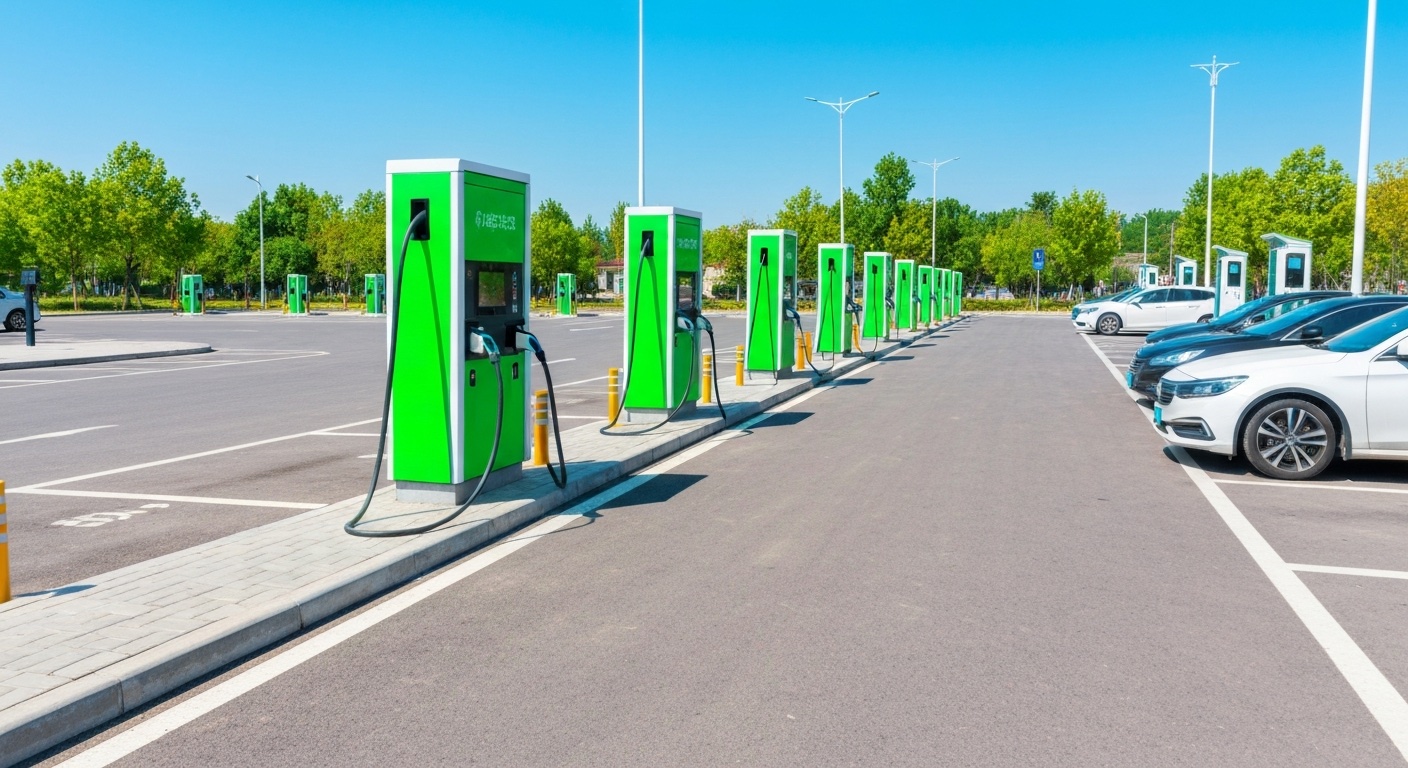
The 共享充电宝 (gòng xiǎng chōng diàn bǎo) is an example of invisible but essential digital infrastructure. Bars, restaurants, subways, and even bus stops have machines that rent portable batteries. You scan a QR code, pick up the battery, and can return it at any other machine in the city.
The system works because it is integrated into superapps. You don't need to register a credit card on each machine or download a specific app. The cost is a few yuan per hour. According to the Tianjin government (data.tj.gov.cn), these products help the elderly adapt to the digital era, ensuring they never run out of battery in emergencies.
When my cell phone warns that it's at 5% battery in the middle of a meeting in Kunshan, I find a swap station every hundred meters. It's a dense network that elegantly solves a real problem. In the West, you need to carry your own power bank. Here, the city provides energy for your devices as a public service.
Low-speed autonomous buses in parks and districts
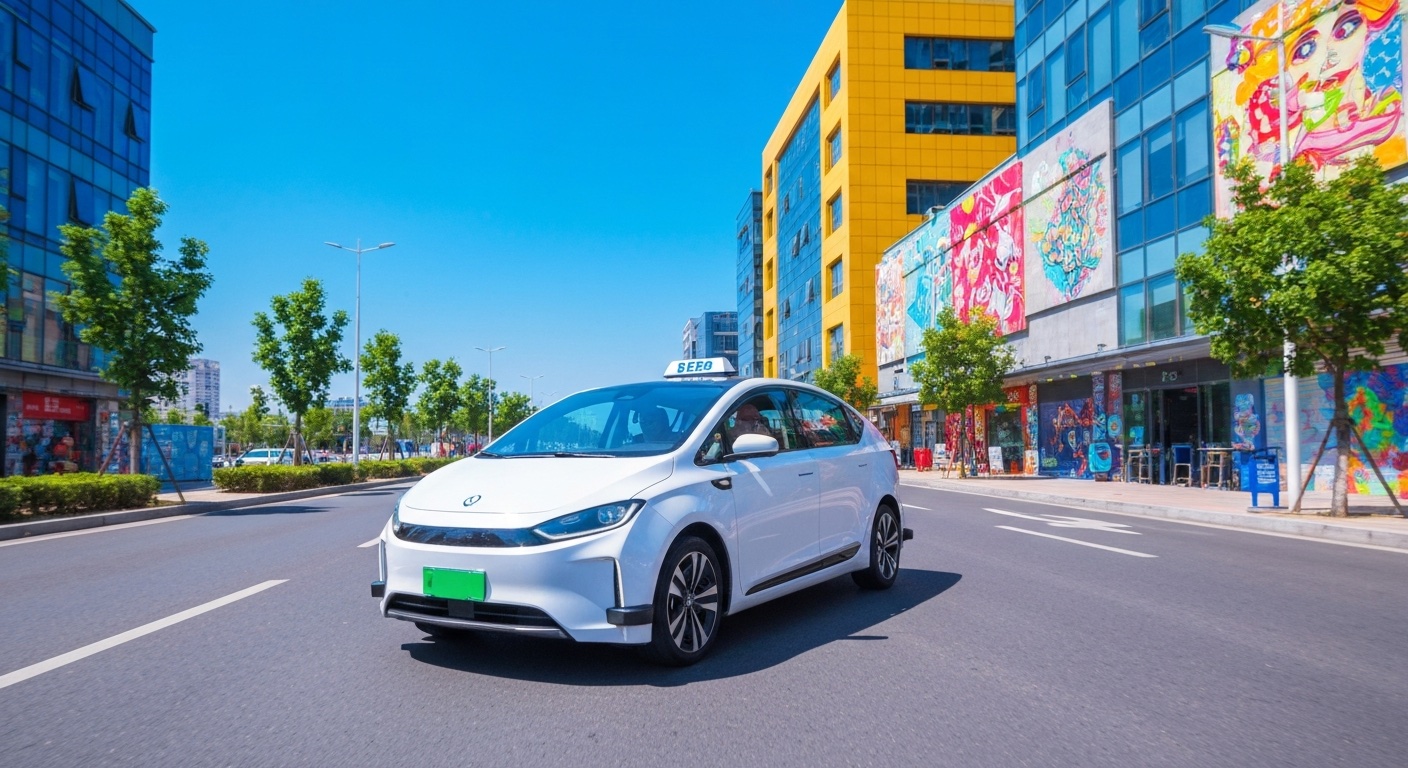
In Tianjin, the 无人驾驶小巴 (wú rén jià shǐ xiǎo bā) circulate — driverless mini-buses. According to 澎湃新闻 (The Paper), China Telecom uses 5G networks to guide these vehicles on fixed routes within parks, universities, and new technological districts.
They operate at reduced speed, detecting pedestrians and obstacles with lidar sensors and 360-degree cameras. The vehicle stops gently if someone crosses in front. There is no steering wheel or driver's cab, just seats and a screen showing the route. For the average user, it's just free or low-cost transportation that solves the last mile.
Here in Kunshan, similar tests happen in industrial zones and ecological parks. Autonomous driving technology in the West still generates debates about regulation and fear. In China, it's pragmatic public transportation that already carries millions of passengers daily in pilot cities.
Electric bike sharing with facial unlocking
Shared bikes have evolved beyond the classic mechanics mentioned by Techradar. Now, fleets of electric bikes unlock with facial recognition, eliminating even the cell phone from the process. You look at the panel on the back of the bike, the system recognizes your face linked to payment, and the lock opens instantly.
雪球 (Xueqiu) lists bike sharing as one of the technologies where China leads globally. In Kunshan, I use it daily to go to the local market. The cost is minimal, usually less than a few cents for half an hour, and I don't need to worry about keys, locks, or apps freezing at payment time.
The integration with the social credit system and payment makes the difference. If you damage the bike, the system knows exactly who did it and applies immediate penalties. This drastically reduces vandalism. In the West, bike sharing still struggles with asset destruction and complex payment systems. Here, it's an extension of public transportation that works 24 hours.
QR code purchases during bullet train trips
Returning to trains, the integration of commerce is total and synchronized. Brazilian journalist Guilherme Belo, cited by 新浪财经 (Sina Finance), showed how it's possible to order gourmet meals from your own seat. The system is not just an online menu. It's a railway logistics where delivery arrives exactly when the train stops at the next station, coordinated with minute precision.
Payment is instant via QR code. This represents Chinese 电子商务 (diàn zǐ shāng wù), described by Bilibili and other sources as the largest in the world in volume. Here, the train is not an isolated environment. It is a node in the national network of ultra-fast deliveries, where physical and digital products circulate at speed.
Try to imagine doing this on the São Paulo Metro or the Yellow Line Train in Rio. The Chinese logistics infrastructure transforms the very concept of travel. You don't lose time. You consume, work, and transact while the country passes by at high speed outside the window.
Access to coworking and offices by digital face badge
To conclude, a recent experience in Xiong'an, the new planned city near Beijing. The shared offices there do not use physical access cards or numeric passwords. Your face is the badge. According to 澎湃新闻 (The Paper), these 共享办公 (gòng xiǎng bàn gōng) spaces have doors, elevators, lockers, and even coffee machines that respond to your face.
The system integrates room scheduling, lighting and temperature control, and payment of services. I arrive at reception, the camera identifies me in seconds, and the elevator already knows which floor to take me without me pressing a button. The office recognizes my presence and adjusts the air conditioning to my personal preference.
In Brazil, coworkings still use plastic badges that we forget on the table or numeric codes that we type in a hurry. Here, your face is your complete digital identity, eliminating frictions that we no longer even notice. It's the future of hybrid work functioning today, where biometrics has created an environment without physical or digital friction.
Publication sources
- 城市上空飘过的无人机,是物流业升维之战的新武器 ↗
- 所谓'通风',不止打开窗这么简单 ↗
- 商米科技闪耀金砖舞台:巴西记者镜头中的中国智慧,赋能中巴新纽带 ↗
- 无人机技术在智慧城市建设中展现出巨大的潜力和实际应用价值 ↗
- 今天,你"City不City啊"? ↗
- 中国究竟哪些技术世界第一? ↗
- 中国在多领域取得显著进步(中英对照版) ↗
- 外媒评中国领先于世界六大的技术:高铁、移动支付和5G上榜 ↗
- 中国的科技技术 ↗
- 雪球 ↗
- 西安市民体验'刷脸'购物 ↗
- 中国'刷脸支付'黑科技comma吸引海外代表团考察 ↗
- 中国电商巨头布局无人超市产业 "刷脸购物"带来新体验 ↗
- 2025上合组织数字经济论坛互动体验区的医疗AI辅助系统 ↗
- 住宿购物可刷脸,提供企业共享办公 ↗