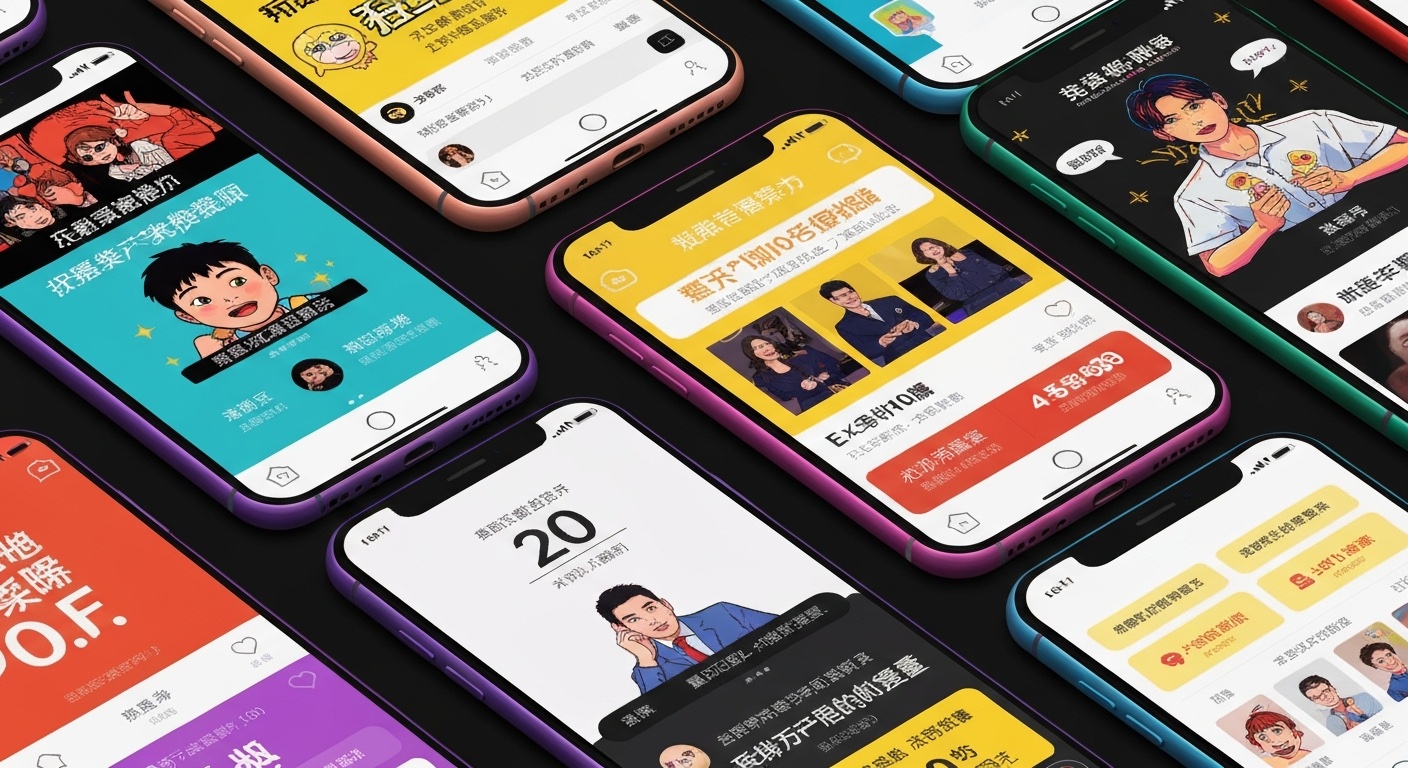
Weibo is the social barometer of China. While TikTok exports dance trends and WeChat functions as a closed ecosystem, it is on Weibo that 580 million Chinese people vent, mock, argue, and turn daily frustrations into viral phenomena. The trending topics there are more than just hashtags — they are X-rays of a society in rapid flux.
We've separated 10 topics that recently blew up on Weibo, and together, they tell a much more complex story than any international headline can capture. Each one opens a window into understanding what 1.4 billion people are feeling right now.
1. The Shrinking Lamb Skewer — And How It Became a National Meme
It all started with a photo. A lamb skewer (羊肉串) bought from a street stall that looked like it was made for ants. The piece of meat was so small that the skewer itself weighed more than the food. The image went viral and unleashed a flood of comparisons: people posting photos of portions that had shrunk while the price went up or stayed the same.
The shrinking lamb skewer meme touched a raw nerve: so-called Chinese "shrinkflation." In a country where the government insists inflation is under control, consumers are responding with photographic evidence to the contrary. The sharp-edged humor serves as an escape valve — it's safer to mock a skewer than to question official data. The topic stayed in the trending for days and even drew responses from stall owners trying to explain themselves, which only fueled more mockery.
2. 43-Person Family Gathering — But Only the Grandparents Stayed
During the Chinese New Year, a video moved and depressed Weibo users in equal measure. A family organized the traditional New Year's Eve gathering with 43 members. In the official photo, everyone was together, smiling, three generations. Days later, another post: the empty house, with just the two grandparents sitting at the huge table. Everyone else had already returned to their cities.
This brutal contrast illustrates one of the biggest social dramas of contemporary China: the loneliness of rural seniors. Hundreds of millions of young people have migrated to urban centers in search of work, leaving parents and grandparents in villages that are emptying out. The New Year's gathering is, for many families, the only time of year they see each other. The video went viral because everyone recognized their own grandparents in that scene. In the comments, thousands of people promised to call more, visit more — promises that statistically, most will not keep.
3. 1.1 Million Entrepreneurs Went to the Temple to Ask for Luck
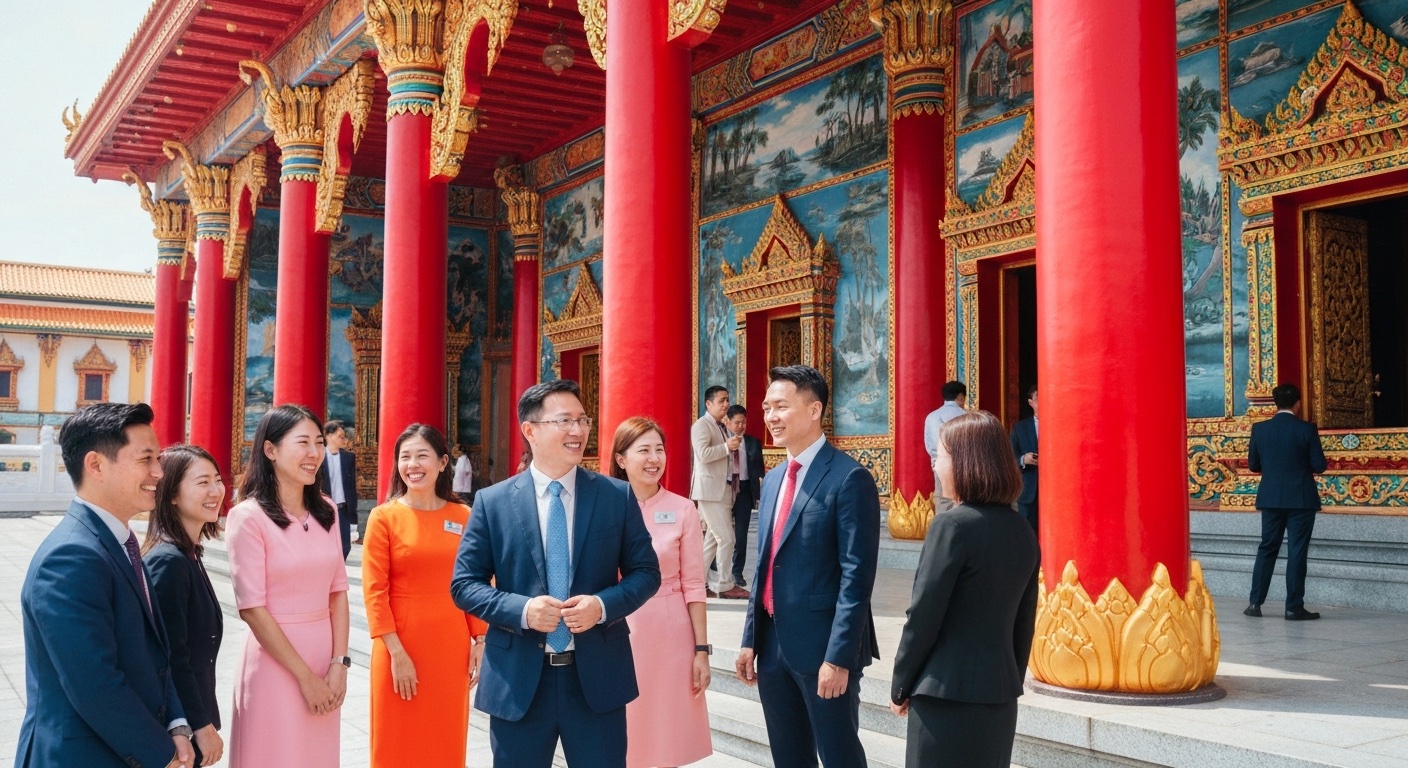
The Yonghe Temple in Beijing recorded kilometer-long queues of young entrepreneurs burning incense and praying for business success. The number — 1.1 million visitors in a few days — went viral as a symbol of a generation that has exhausted rational options and turned to the metaphysical.
The context is heavy. The Chinese economy has slowed, youth unemployment has hit record highs (it surpassed 20% before the government stopped releasing the data), and the real estate market — once the safe bet for the middle class — has imploded. When plan A, B, and C fail, all that's left is plan T: the temple. The phenomenon isn't exactly religious; most of these young people are not practicing Buddhists. It's more of a ritual of desperate hope, and the fact that this became a trending topic says everything about the state of mind of a generation.
4. The Debate About "Dying-Alone" Apartments
A real estate developer launched compact apartments — studios of 20 to 30 square meters — with controversial marketing: spaces designed for people who plan to live and die alone. The reaction on Weibo was a mix of horror, identification, and dark humor.
China is facing an unprecedented demographic crisis. The birth rate has plummeted to historic lows, the number of marriages has fallen for the ninth consecutive year, and a growing portion of the young population has simply given up on forming a family. The reasons are practical (cost of living, work pressure, price of housing and education) and cultural (shifting values, growing individualism). The "dying-alone" apartment didn't create this reality — it just gave it a name. And naming things in China, especially when the government is pushing pro-natality campaigns, always makes noise.
5. Electric Car Traffic Jams During the Holiday
The Chinese New Year causes the planet's largest annual human migration — the chunyun. Billions of trips in just a few weeks. With the explosion of electric vehicles in China (more than 50% of new cars sold are already NEVs), a new problem emerged: giant queues at charging stations on the highways.
Videos showed drivers waiting 4, 5, even 8 hours to charge their cars. Some were sleeping in their vehicles, others were arguing in line. The range that works perfectly in urban daily life becomes a nightmare on long trips, especially when everyone is traveling at the same time. The topic sparked technical debates (insufficient infrastructure, charging speed) and emotional ones ("I should have bought a hybrid"). It's a reminder that China's energy transition, despite its impressive scale, still has real bottlenecks that affect people's lives.
6. The Controversy Over Tips for Delivery Drivers
A simple post — "do you tip your delivery driver?" — generated millions of interactions. In China, tipping is not culturally standard. But the discussion revealed a growing tension: on one side, consumers who know that delivery drivers (外卖骑手) are earning less and less per delivery and work under brutal conditions; on the other, the resistance to normalizing a practice that, for many, should be the responsibility of the platforms, not the customer.
Delivery drivers are the backbone of Chinese urban life. Meituan and Ele.me process tens of millions of orders per day. But the algorithm that optimizes routes also squeezes margins and penalizes delays of seconds. Reports and documentaries about the working conditions of these professionals had already generated public sympathy before, and the debate about tips reignited everything. Deep down, the question isn't about tipping — it's about what kind of society China wants to be.
7. Packed Pet Hotels During the Chinese New Year
While the grandparents were waiting alone in the villages, the pets of the urban middle class were staying in hotels with live cameras, air conditioning, premium food, and even "socialization activities." Prices skyrocketed during the holiday: a daily rate for a golden retriever in Shanghai cost more than a hotel room for humans.
The irony was not lost on Weibo. Biting comments compared the treatment given to animals with the abandonment of rural seniors. But the phenomenon reflects something real: for millions of young Chinese who don't have children (and don't plan to), the pet is the family. The pet industry in China already moves more than 300 billion yuan per year and is growing in the double digits. It is a direct consequence of the demographic crisis — when people give up on having children, love goes elsewhere.
8. AI Girlfriends — The New Normal?
Companion apps with artificial intelligence have exploded in China. Platforms like Xingye and others offer "girlfriends" (and "boyfriends") who chat, send loving voice messages, remember important dates, and never complain. The topic went viral when users started sharing screenshots of emotional conversations with their digital partners.
The phenomenon connects several threads of contemporary Chinese society: urban loneliness, social pressure on relationships, the real difficulty of meeting people in a culture of exhausting work, and a generation that grew up more comfortable with screens than in-person interactions. The comments on Weibo oscillated between genuine concern ("this is sad") and pragmatism ("at least it doesn't ask for half the apartment in a divorce"). The government, which desperately needs people to marry and have children, is watching the trend with thinly veiled apprehension.
9. The Silent Revolt Against the 996
The 996 system — working from 9 a.m. to 9 p.m., 6 days a week — has been officially declared illegal by China's Supreme Court. In practice, it remains the norm in much of the tech sector and beyond. A new trend emerged when employees at a company began documenting their actual working hours and posting anonymously.
The result was an avalanche. Thousands of workers from different sectors joined in, creating an informal map of labor exploitation in the country. Some posts were censored, others survived. The 996 is a topic the government allows to circulate to a certain extent — after all, it declared the practice illegal — but it becomes uncomfortable when the criticism extends to the economic model as a whole. The generation that saw their parents work themselves to death to buy an apartment that is now worth less is asking, with good reason: for what?
10. 躺平 (Tǎng Píng) — Lying Down and Doing Nothing
The "lying flat" movement isn't new — it emerged around 2021 — but it continues to resurface on Weibo with force. The idea is simple: in a system where working hard no longer guarantees social mobility, the rational response is to stop trying. Not buying a house, not getting married, not having children, consuming the minimum, working only what is necessary to survive.
The 躺平 is the antithesis of the "Chinese Dream" promoted by Xi Jinping. It is a form of passive protest that the government tries to combat with motivational campaigns and selective censorship, but it remains alive because it reflects a material reality: the implicit social contract ("work hard and you'll have a better life than your parents") has broken for millions of young people. The topic resurfaces whenever negative economic data leaks or when another story of burnout goes viral. It is less an organized movement and more a diffuse feeling that unites an entire generation.
What These Trending Topics Say About China
Viewed in isolation, they are memes, controversies, and internet debates. Viewed together, they form the portrait of a society in deep transition: aging rapidly, urbanizing under pressure, questioning values that seemed immutable just a generation ago, and using humor as a tool for emotional survival.
The China that appears on Weibo is very different from the China that appears in international news. It is not the geopolitical superpower nor the authoritarian dystopia — it is a country of real people dealing with real problems, many of which are not so different from our own.
At chinato.watch, we follow these conversations closely. Not to translate literally, but to contextualize — because understanding China for real requires going beyond the headlines and diving into what people are saying when they think the world isn't listening.
Follow more at chinato.watch — China as it is, without filter and without cliché.